Dean's Pier / Carlton
Gallery
img
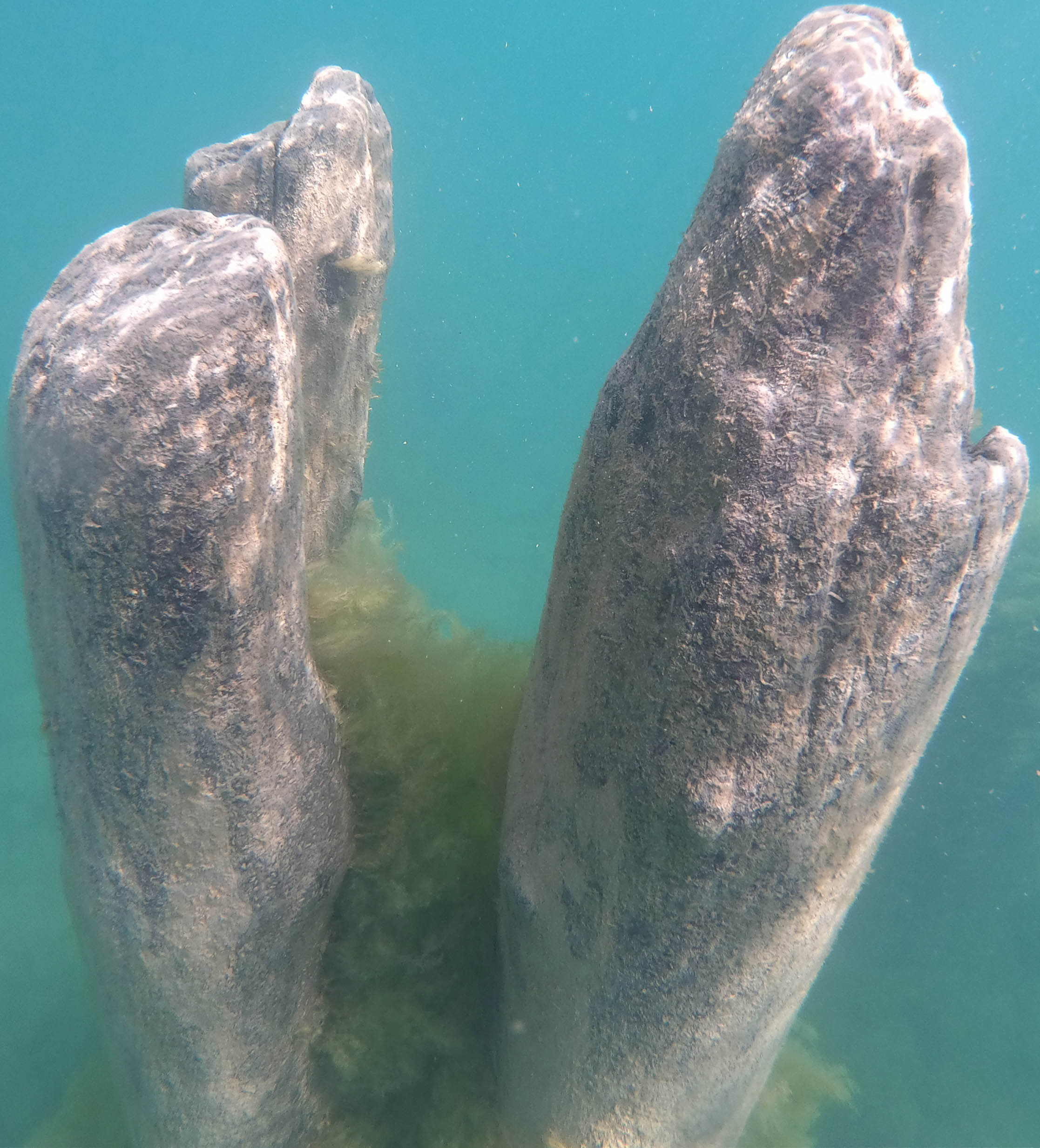
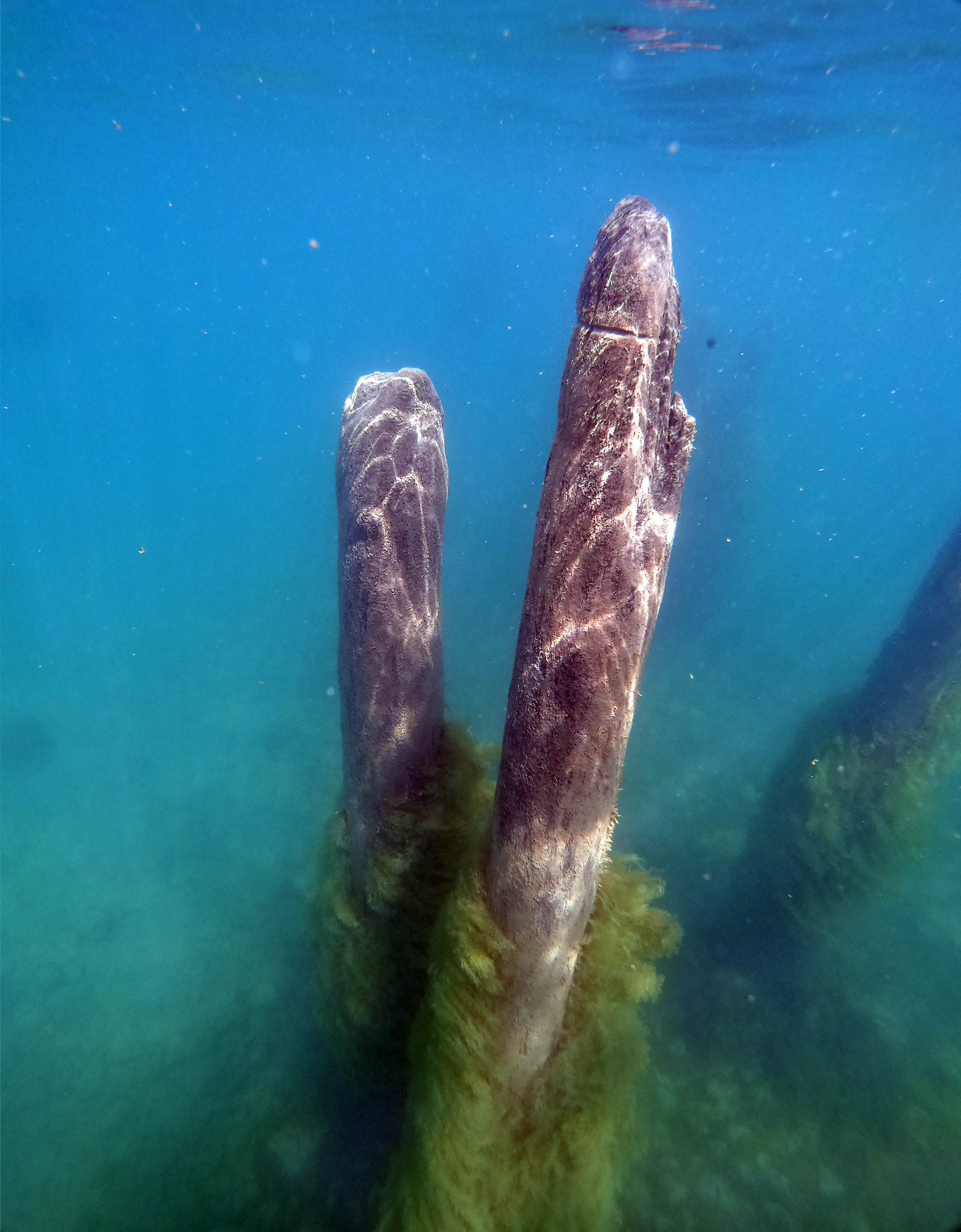
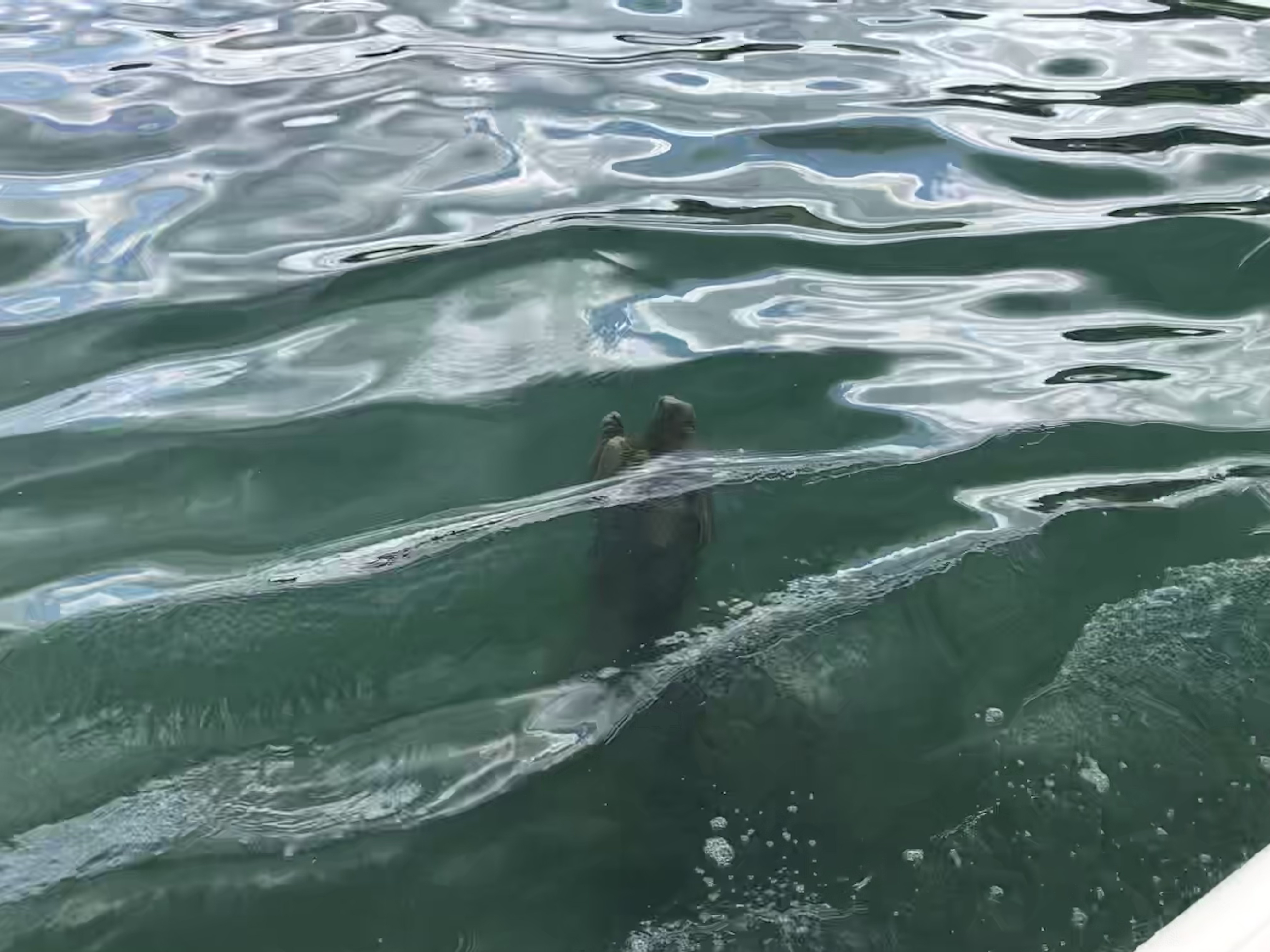
A piling for Dean's Pier underwater
img
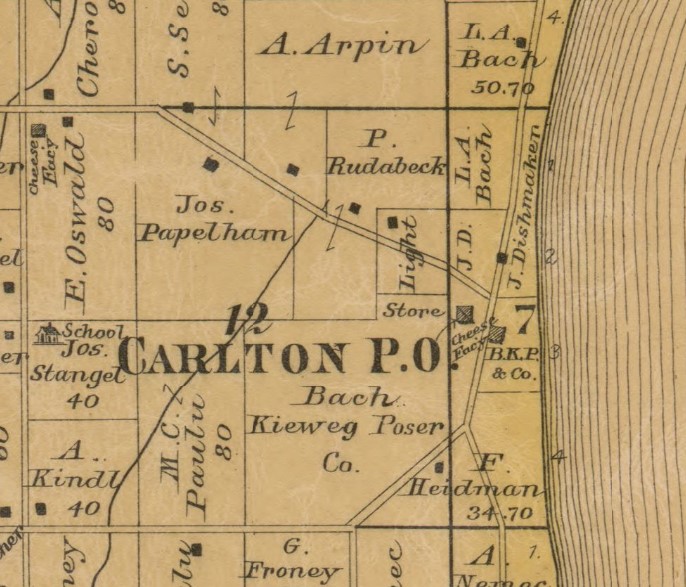
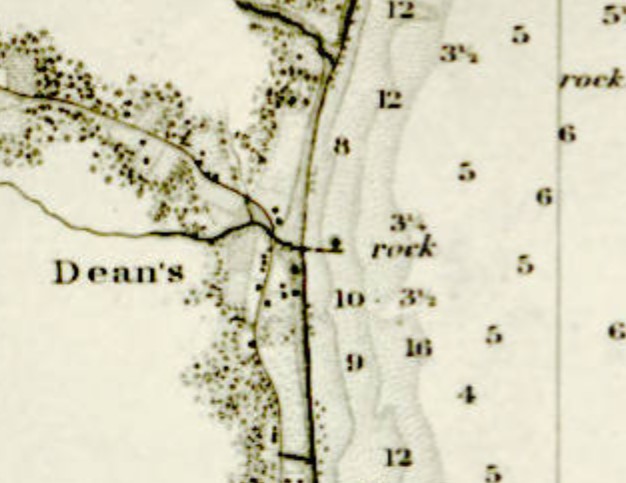
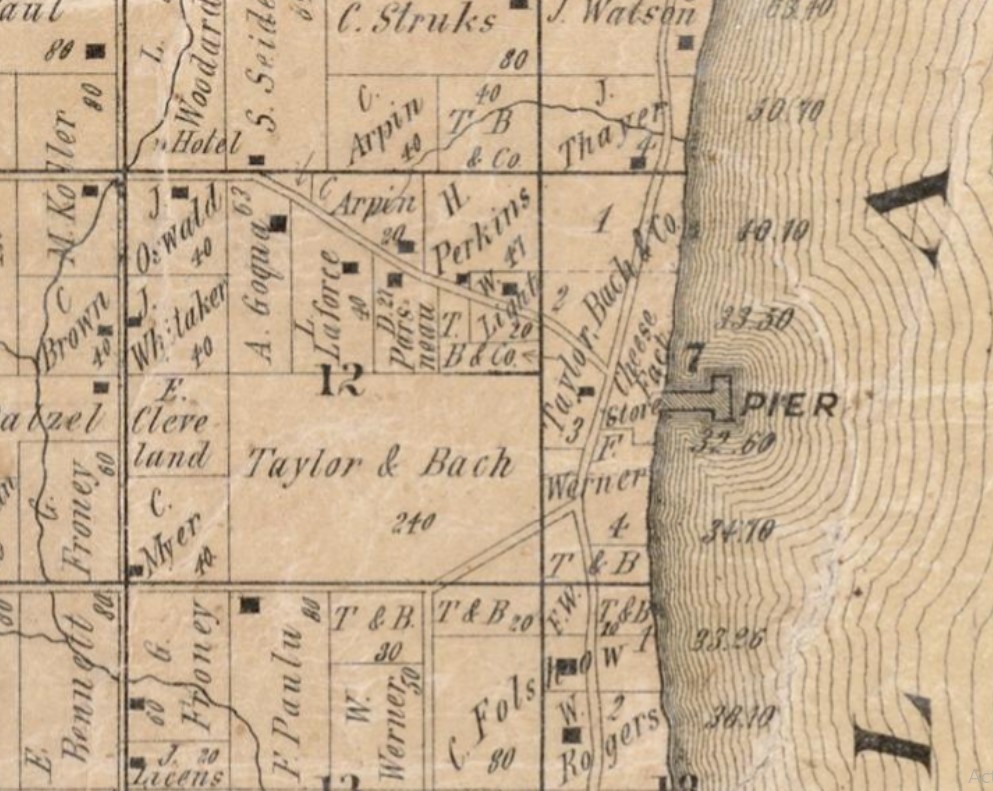
1895 Map of Dean's Pier
img
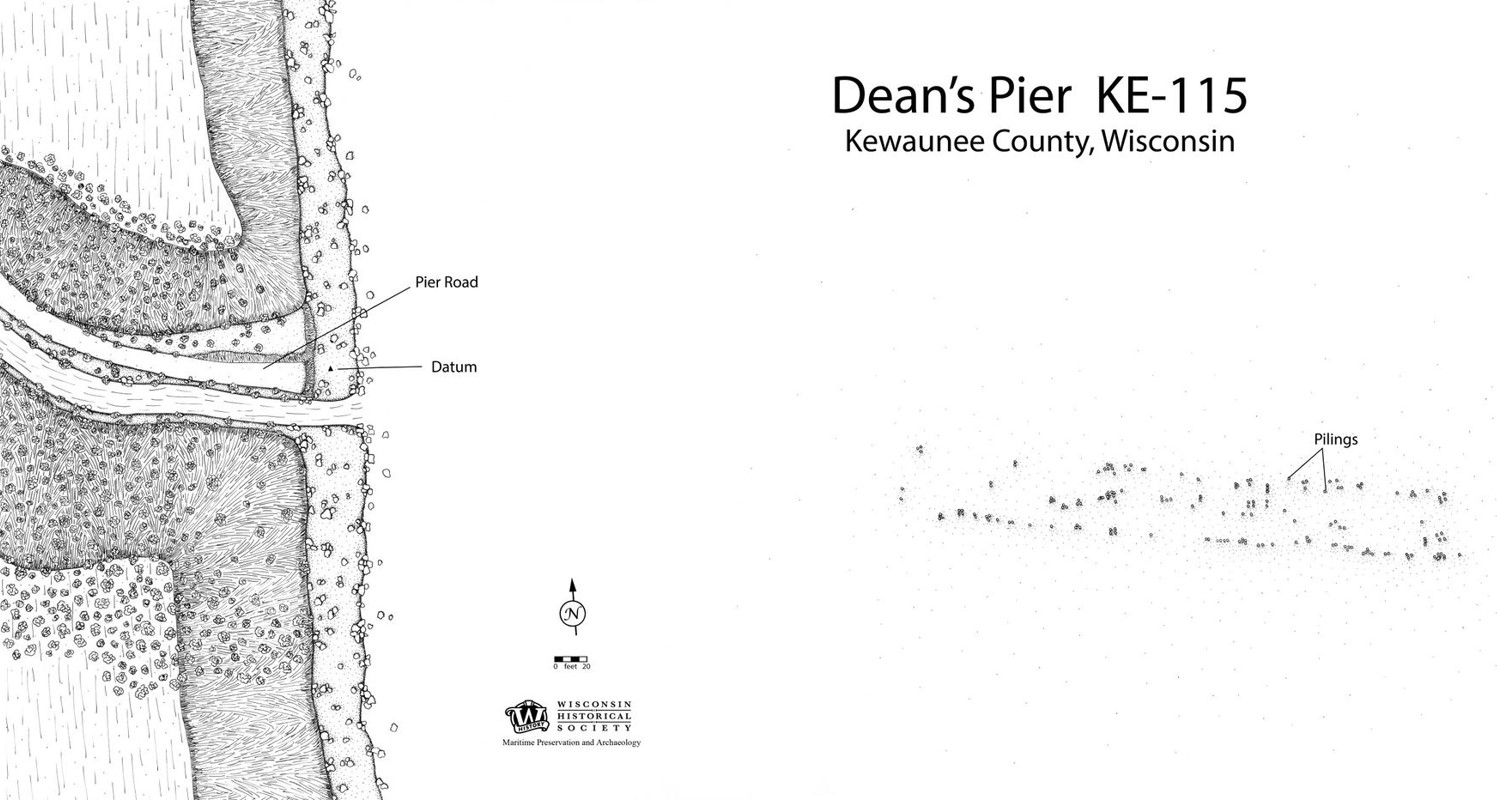
Deans Pier Site Plan
img
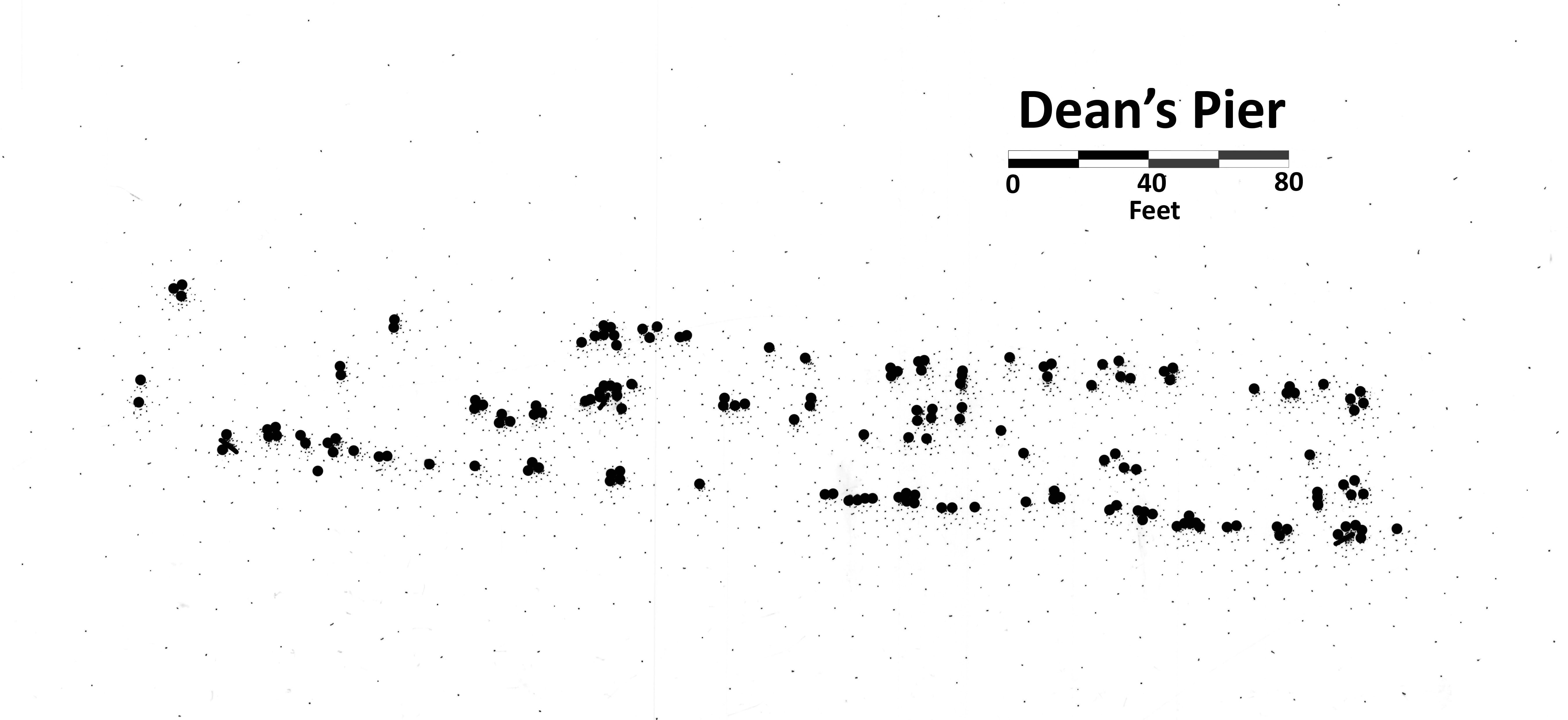
Detail of Dean's Pier
img
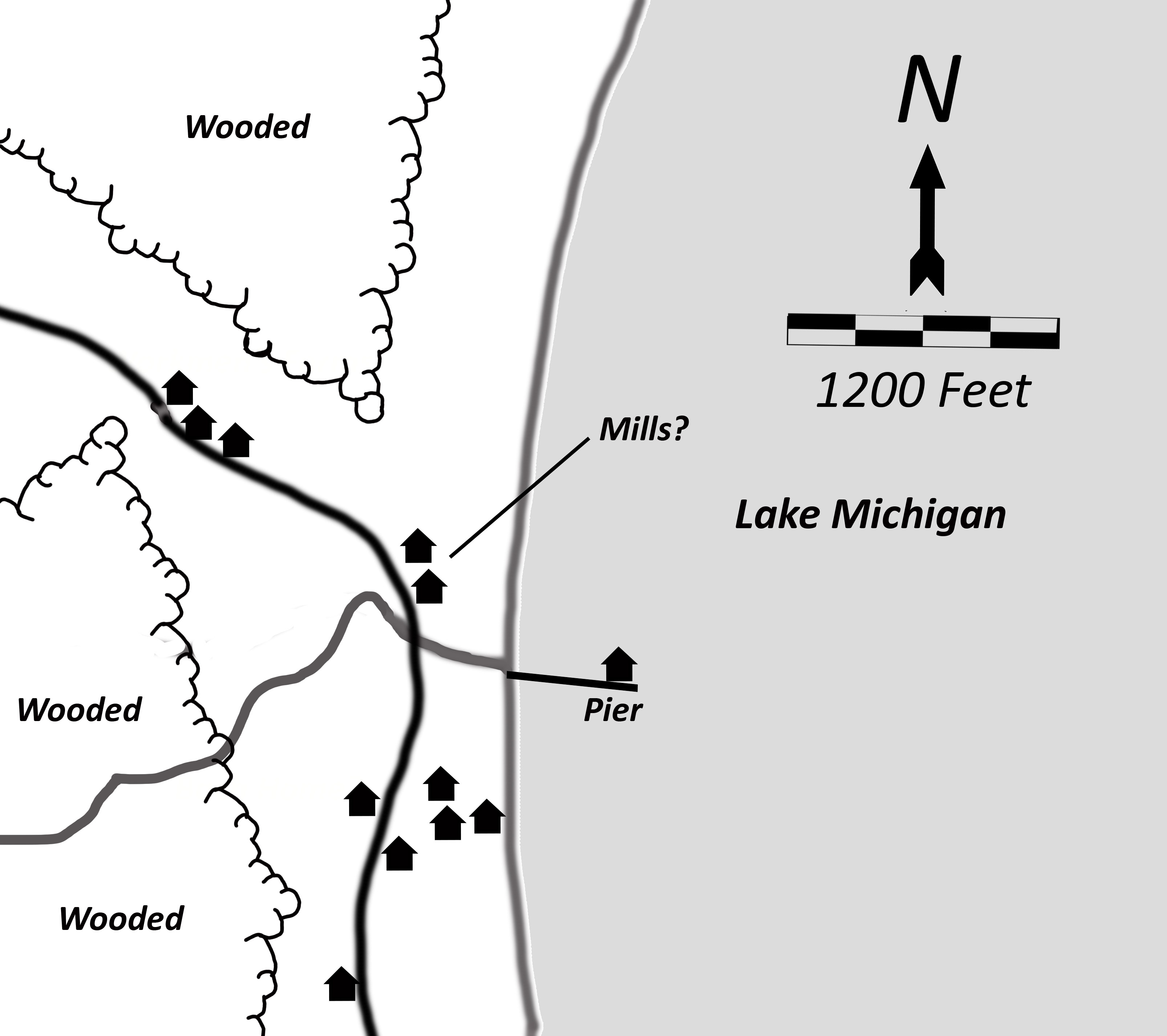
Map of Deans Mills 1866
img
Map of Dean's Pier 1866-1877
img
Dean's Pier Map 1876
img
A piling for Dean's Pier Underwater
img
Underwater View of the Pier Piling
 
Attraction
Description
Deans Pier is located offshore from the intersection of Lakeshore and Lake Roads, where a small stream enters Lake Michigan. It is the best preserved of the Kewaunee County 19th century commercial bridge piers which were used to transport goods across the coastal shallows to deeper waters. The pier supported a small, thriving community that endured longer than any of Kewaunee County’s other ghost ports due to its diverse economic base.

The first pier at this location was built by Elisha B. Dean and his cousin John J. Borland in about 1854. The partners hired a force of lumbermen and workmen and built a steam sawmill, a gristmill, and a general store that they stocked with clothes, tools, dry goods, and other supplies for farmers, settlers, lumbermen, and travelers. As at most commercial pier stores of this era, the goods could be purchased with cash or with timber products. Farmers clearing their land made shingles, railroad ties, fence posts and other items, and brought them to the pier store to sell. Dean & Borland’s employees also hauled in loads of timber and tanning bark from the company’s inland holdings.

Dean set up a homestead at the mill complex, while Borland relocated south to Chicago to handle the partner’s shipping matters in the city. After the outbreak of the Civil War, Borland volunteered to fight for the 27th Wisconsin Regiment of the Union Army and marched south. By then, the pier complex included the mills, a tavern and dance hall, a boarding house, stables, barns, and workmens' housing. In 1864, just after Borland was wounded at the battle of Jenkin’s Ferry fighting in Arkansas, a wildfire destroyed the pier and all but two buildings in the complex. Borland was discharged from the Army due to his injuries, came home, and sold his shares to Joel V. Taylor, a former partner of Dean's.

Dean & Taylor rebuilt the pier and its support complex, and resumed shipping. They hired Ed Bach, a Bohemian immigrant who had served with Borland, to clerk in the general store. When Dean grew tired of the enterprise in 1867, he sold his partnership to Bach. Taylor, meanwhile, remained in Chicago just as Borland had.

Under Bach’s management—and later that of his brother, Fred Bach—Dean’s Pier reached its peak. By then, the little community was known as ‘Carlton’. The Bach’s, working in conjunction with nephews John and Fred Dishmaker and manager and later partner Wenzel Kieweg, established a large, modernized show farm, often described as one of the finest farms in Kewaunee County. The community included the Bach farmstead, worker’s housing, a telegraph office and post office, barns, stables, a wagon shop and blacksmith shop, a granary, and storehouses.

Ed Bach, who founded the Kewaunee County Agricultural Society, foresaw the imminent end of the lumber boom. He refocused the company’s efforts away from the sawmill and towards their store and farm. The partners sold and dismantled the sawmill in 1874, and began construction of the first cheese factory in Kewaunee County. The factory was soon turning out some of the finest cheese in Wisconsin. Ed Bach retired to Evanston, Illinois before relocating to the Dakotas. Taylor sold his stake in 1882.

Under the management of Fred Bach, Wenzel Kieweg, and John Dishmaker, Carlton continued its transition to a mercantile and cheese-based economy. On schooners and lake steamers, the partners shipped grain, hay, other produce, and tens of thousands of pounds of cheese from the pier. As the company’s financial holdings grew, they began to branch out. A short-lived store was opened in Norman, Wisconsin between 1884 and1886. A longer-lived, larger, two-story brick department store opened in downtown Kewaunee in 1893. By then, the era of the lumber trade was over. The senior partners moved to Kewaunee to run the new department store. The Carlton business was turned over to the partner’s adult children for a time, before it sold to new owners. Carlton’s final owner, E. Miller, drove the store into bankruptcy in 1910. By the 1930s, there was nothing left of Carlton but the ruins of the community and exposed pier pilings offshore.

The remains of Dean’s Pier lie on a heading of 97-degrees and extend from 347 to 720 feet off shore. The pier measures 47 feet in width, and consists of at least 144 remaining pilings in seven to 15 feet of water. The spacing of the pilings is irregular, likely due to the fact that Dean’s Pier was rebuilt multiple times throughout its career. Similar to the other piers recorded in this region, the pier was supported by three rows of pilings. The outer rows consist of grouped pilings set close together, while the central row appears to consist of paired pilings.

Many other clusters of pilings and single pilings are extant in between the three main rows. These are remnants from earlier versions of Dean’s Pier, or were added to give the pier additional support in sections. The pier was able to accept up to four vessels at one time, and was one of the longest operating piers in the area so it would have needed extra support. One single, smaller diameter piling is located outbound of the end of the pier and might have been the support for a shed, shelter, or granary. Many of the pilings come to within inches of the water’s surface, and some break the surface in years of low water or during storms.
 
Map
 
Nearby
© 2026 - Wisconsin Sea Grant, Wisconsin Historical Society