Sandy Bay Pier
Gallery
img
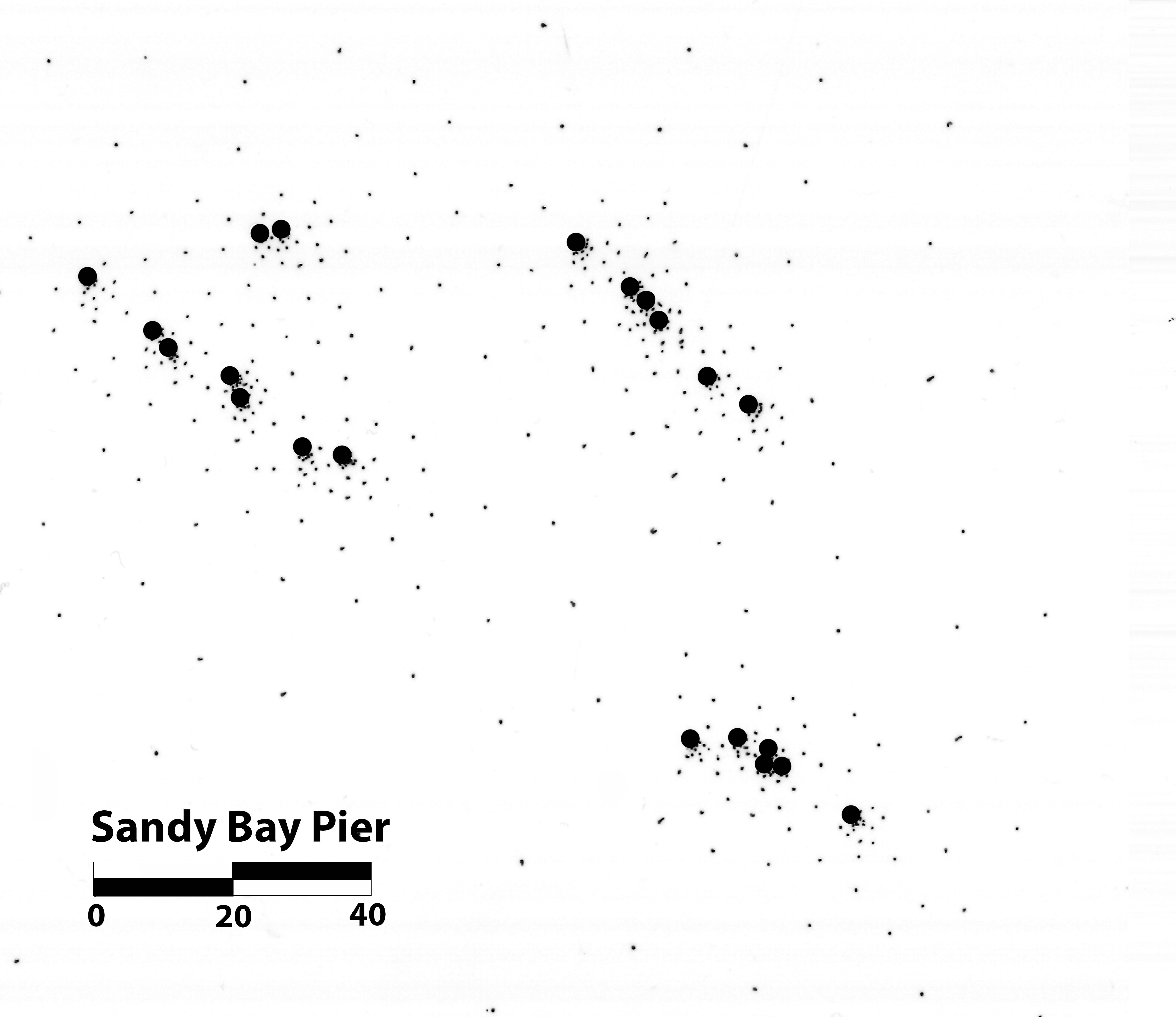
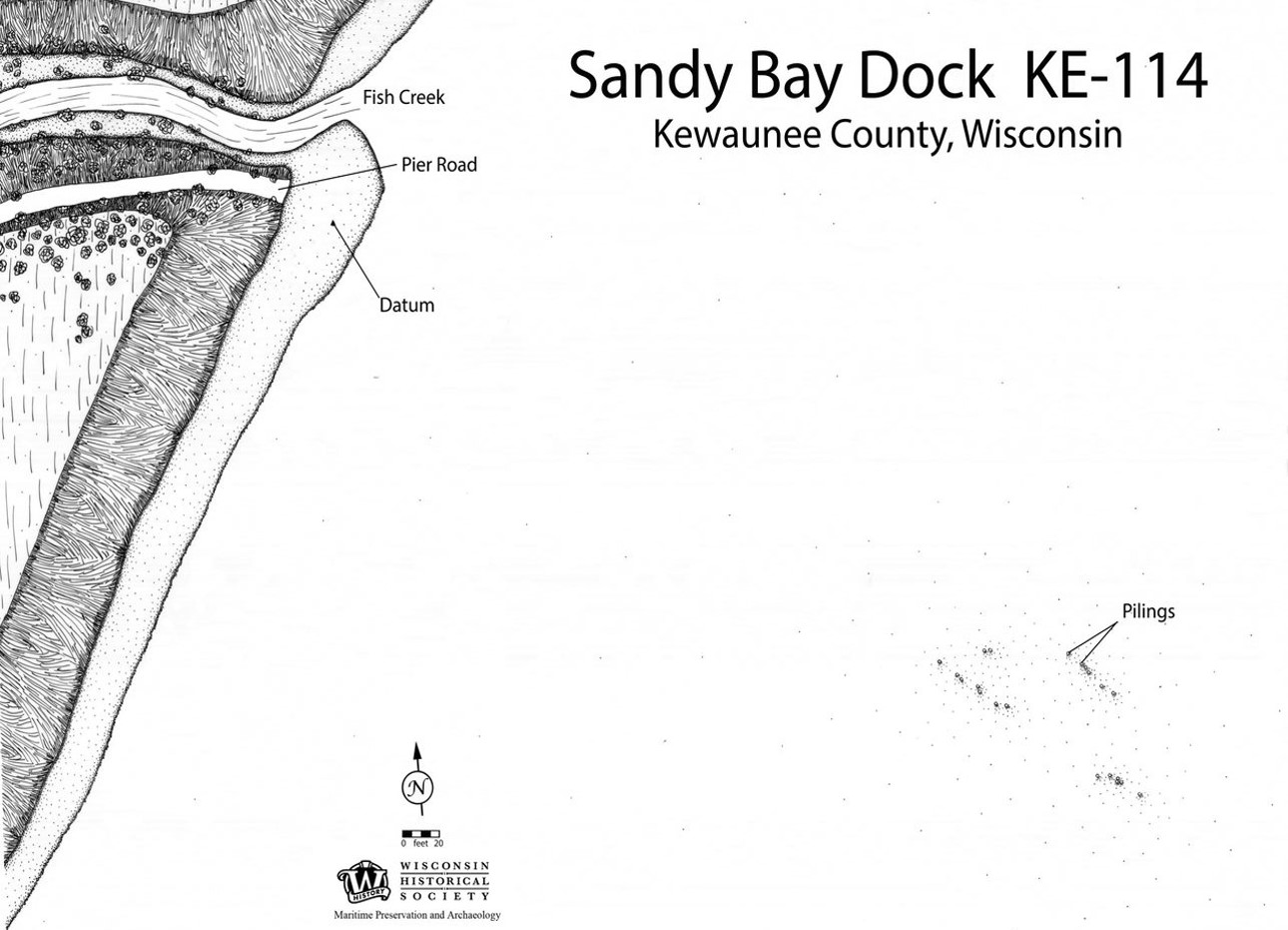
Sketchmap of Pier Remains
img
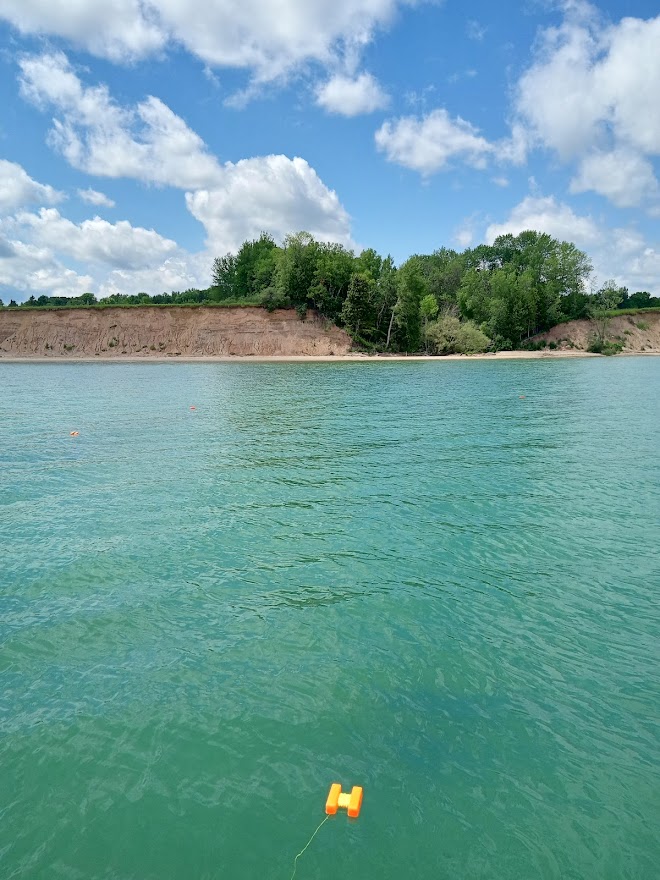
Sandy Bay shore from Lake with pier posts marked with floats.
img
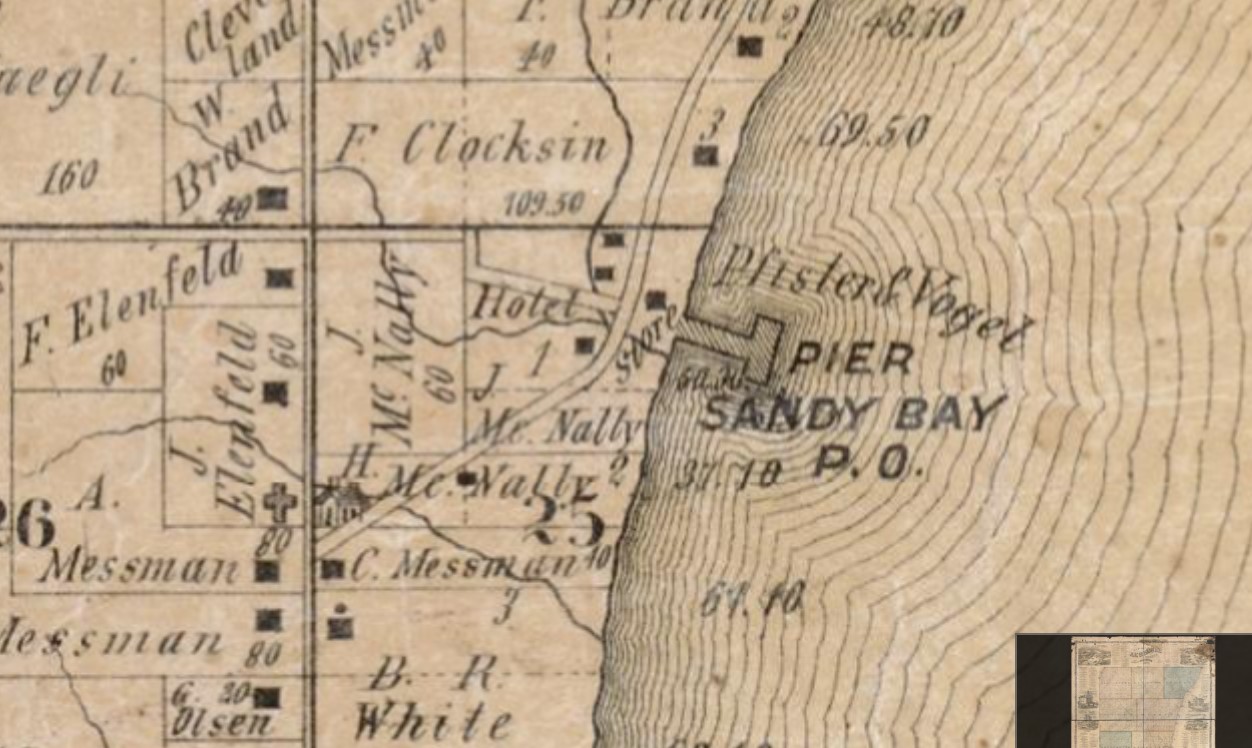
Sandy Bay Map 1876
img
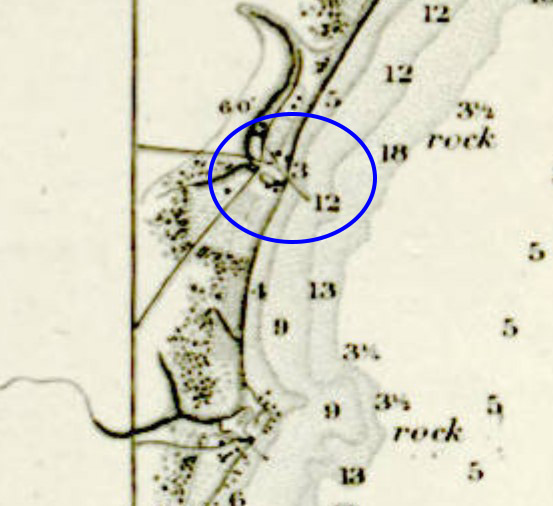
Sandy Bay & Mystery Pier 1866-1877 Highlighted
img
Sandy Bay Pier Map
 
Attraction
Description
The Sandy Bay pier is located offshore from the grounds of the Kewaunee Power Station. It is one of several mid-19th century private commercial bridge piers along the Kewaunee County coast, each marking the location of a lost coastal community. Bridge piers were used to move goods to schooners and other ships in the lake fleet from shore—and vice versa—over shallow water where ships could not sail.

The Sandy Bay Pier was built between1851 and 1852 by Irish whaler and sailor John McNally and his father-in-law Hugh Ritter. Their pier was only the second built in Kewaunee County, after Volk’s Pier in Kewaunee. McNally erected a small sawmill and dammed the stream that empties into the lake at this location to create a mill pond. McNally engaged in small-scale milling and shipping of lumber products such as tanning bark and cedar shingles until 1860, when the pier was purchased by Guido Pfister and Frederick Vogel Sr., the founders of the Pfister & Vogel Leather Company of Milwaukee. The pier complex and its little community of workmen served as a supply point for their tanneries in Milwaukee and in nearby Two Creeks, Manitowoc County.

Though McNally continued to own and operate his mill, operations on the pier and in the pier complex were overseen by new manager John Waegli, a Swiss immigrant in the employ of Guido Pfister. A small general-goods store was built along the lakeside road near the pier. It was stocked with clothes, tools, dry goods, and other supplies for farmers, settlers, lumbermen, and travelers. As at most commercial pier stores of this era, the goods could be purchased with cash or with timber products. Farmers clearing their land made shingles, railroad ties, fence posts and other items, and brought them to the pier store to sell.

Sandy Bay’s trade was small compared to the larger cities and ports, but still significant. In the early 1870s, Sandy Bay shipped thousands of cords of tanning bark and cordwood, thousands of cedar posts, and tens of thousands of railroad ties each season. The pier store and lumber trade supported a small community that included employee housing, McNally’s mill, the store, stables, barns, warehouses, a blacksmith shop, a telegraph office, a post office, a school, and the Lakeside House hotel (in McNally’s home). Residents put on amateur theatrical productions and held debates.

In 1877, Pfister & Vogel put the property up for sale. Waegli raised the funds needed to purchase the property, and took ownership in 1878. Waegli continued in the employ of Pfister & Vogel, however, managing their complex at Two Creeks in addition to running Sandy Bay and working his own farm. The end of the lumber boom and the loss of Pfister & Vogel’s funding, however, spelled the end for the little port community. The pier soon stood idle and the buildings in the complex were torn down one-by-one. Shipping ceased before 1882, and the support complex was idle and abandoned by 1891. McNally died at Lakeside House in 1894 and Waegli moved to Kewaunee not long afterwards.

The remains of the Sandy Bay Pier lie offshore on a heading of 126-degrees, and extend 510 feet from shore. Overall, the pier measures 44 feet in width. It consists of at least 21 remaining pilings sitting in in 6 to 12 feet of water. The extant pilings extend from 379 feet to 510.0 feet from shore. It is likely that more pilings exist closer to shore covered by sand and rocks. The pier was once supported by three rows of pilings. The two outer rows are currently the best preserved.
 
Map
 
Nearby
© 2026 - Wisconsin Sea Grant, Wisconsin Historical Society