
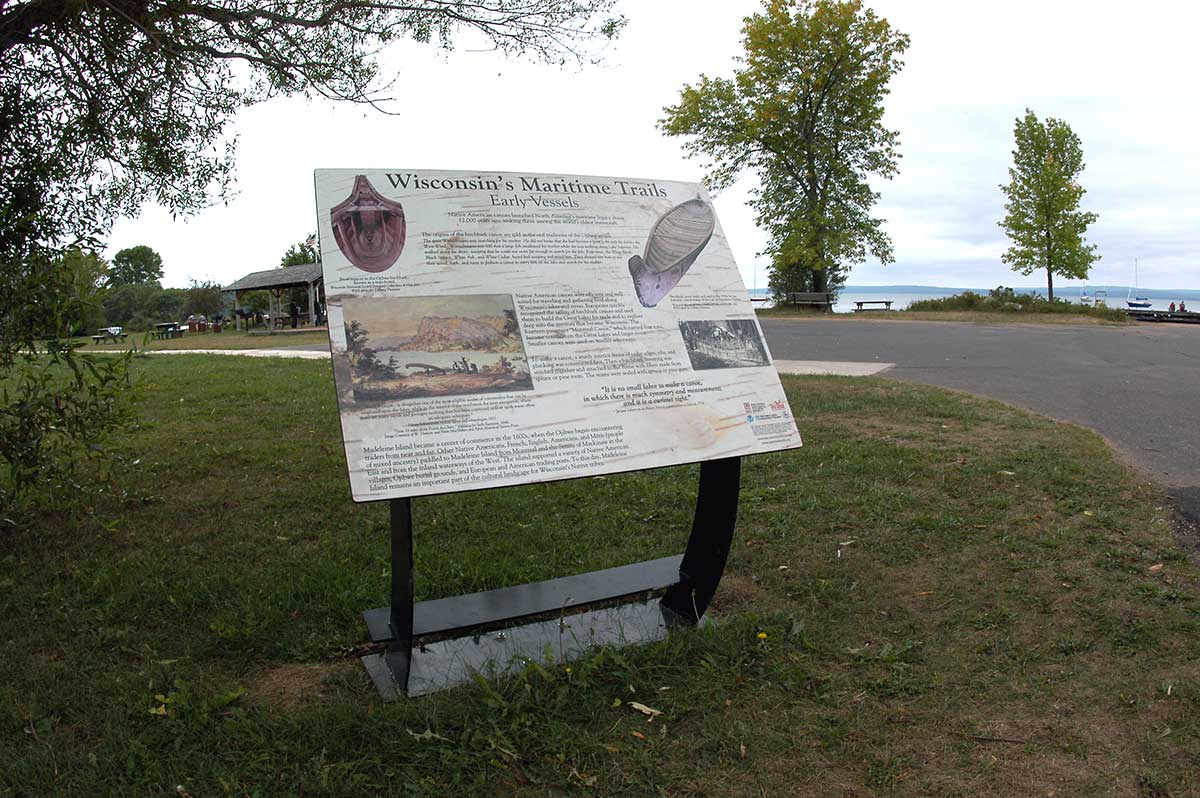
Early Vessels Maritime Trails Marker
Gallery
img
Native Watercraft Maritime Trails Marker
img
Native Watercraft Maritime Trails Marker
 
Attraction
Description
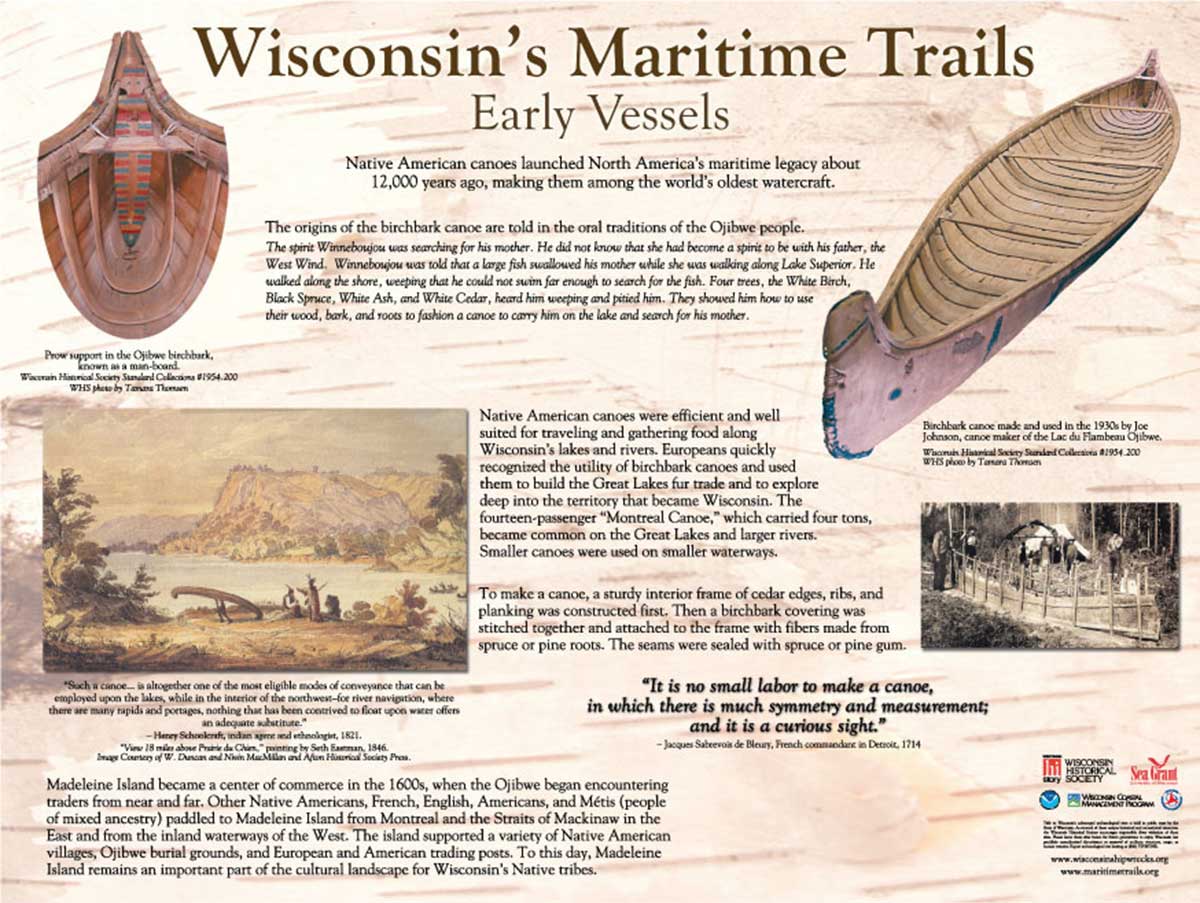
The Ojibwe tell of the origins of their birchbark canoe: The spirit Winneboujou was searching for his mother. He did not know that she had become a spirit to be with his father, the West Wind. Winneboujou was told that a large fish swallowed his mother while she was walking along Lake Superior. He walked along the shore, weeping that he could not swim far enough to search for the fish. Four trees, the White Birch, Black Spruce, White Ash, and White Cedar, heard him weeping and pitied him. They showed him how to use their wood, bark, and roots to fashion a canoe to carry him on the lake and search for his mother. Oral Tradition of the Lac Courte Oreilles Ojibwe Madeline Island became a center of commerce in the 1600s, when the Ojibwe began encountering traders from near and far. Other Native Americans, French, English, Americans, and Metis (people of mixed ancestry) paddled to Madeline Island from Montreal and the Straits of Mackinaw in the East and from the inland waterways of the West. The island supported a variety of Native American villages, Ojibwe burial grounds, and European and American trading posts. The first vessels to travel on Wisconsin lakes and rivers were Native American dugout and birchbark canoes. Native American canoes were efficient and well suited for traveling and gathering food along Wisconsin's lakes and rivers. Quickly recognizing the utility of the birchbark canoe, Europeans used them to build the Great Lakes fur trade and to explore deep into the territory that became Wisconsin. The fourteen passenger 'Montreal Canoe,' which carried four tons, became common on the Great Lakes and larger rivers. Smaller canoes were used on smaller waterways.
 
Map
 
Nearby
© 2026 - Wisconsin Sea Grant, Wisconsin Historical Society