Service History
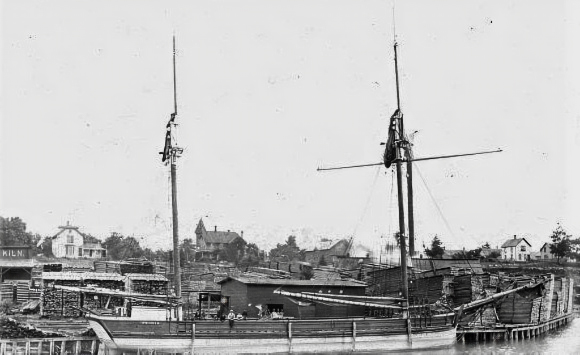
The two-masted schooner
Peoria was built by master carpenter Alanson Gilmore over the winter of 1853-1854 at Black River, Ohio. The vessel was built for Charles H. Livingston and Captain E.P. Frink.
Peoria initially took various bulk cargoes on Lake Erie, but eventually worked on Lake Michigan.
Peoria suffered two minor accidents during the 1856 season: a collision with the schooner
North Carolina on Lake Erie and another with the schooner
Wings of Wind in the mouth of the Grand River, Port Island. The
Peoria exchanged hands for its first decade, transitioning its home port to Chicago, and entering the lumber trade. On the morning of December 17, 1861, a small fishing skiff off the port of Grand Haven, Michigan, was overturned and shattered by the
Peoria, drowning three of the four fishermen. Returning to Chicago, the crew found the Chicago Police Department waiting for them at the dock. Captain Elsey and seven crew members were arrested and transported back to Grand Haven for questioning; the Captain and Mate were jailed and held over to appear in Circuit Court. It is unknown what penalties were received for the deaths. From 1862 onward,
Peoria had only minor incidents and damage. In July 1878 the 24-year-old
Peoria was on a return trip to Chicago with a cargo of lumber and began "leaking freely." The crew worked the pumps through the night to keep up with the leak. Once the ship was unloaded, it was immediately taken to dry dock. The vessel returned to service in August. A series of small accidents occurred throughout the 1878-season. The ship was delayed starting its sailing season in 1879 due to a strong sailor unionization movement in Chicago.
On October 16, 1880,
Peoria ran aground in tremendous seas on an outer reef near the Baileys Harbor Lighthouse with lumber from Grand Haven. After several fruitless attempts to rescue the crew, the schooner
Conway took the men off of the
Peoria. This storm later became known as the "Great Storm of 1880" or "The Big Blow," where twenty vessels stranded, with seven going ashore at Baileys Harbor alone. By the end of October, the ship was reported in bad condition and was abandoned. The wreck of the
Peoria was sold to Door County residents Captain George Bennett and Lincoln Erskine for $100. In 1881 Captain Bennett surmised that it could be salvaged and sail again. On April 7 Bennet and Erskine sold
Peoria to Scofield & Co. for $600. A month later with multiple tugs,
Peoria was freed. The operation totaled $1,000.
Peoria, towed by the tug
John Leathem, arrived in Milwaukee on May 18, 1881, and immediately sank. Once pumped out and repaired (at the cost of another $1,200), the formerly wrecked
Peoria was relaunched on June 2, 1881, where it continued in the lumber trade. Milwaukee became its new homeport.
Peoria had a friendly rivalry with the Leathem & Smith schooner
Westchester. By September 1883
Peoria required maintenance and the vessel received a new mainmast boom along with extensive repair. At this time
Peoria had made four round trips between Sturgeon Bay and Chicago in twenty days, it was recognized to be the fastest time of any sailing vessel on Lake Michigan. On November 19, 1885,
Peoria struck the outer breakwater at Chicago in tow of the steambarge
Thomas H. Smith, sustaining extreme damage. Captain Boyd of the
Thomas H. Smith made a statement to the newspapers refuting the accident and stating that the
Peoria was undamaged and no repairs were required. The vessel was temporarily stripped down to a barge on November 21, 1886, so it could be used to transfer horses, cattle and machinery. It's masts would be restored in the 1887 season. After a collision with the steamer
R.P. Fitzgerald on November 19, 1892,
Peoria's bow was split open down the stem, causing the ship to sink up to its deck. The storm persisted and the
Peoria was not recovered until November 21 when tug
Knights Templar attempted to move
Peoria to a dock, however the tug's machinery became disabled and the schooner was abandoned. The tug
Simpson later moved
Peoria back to the gas company dock to avoid blocking navigation on the river. Throughout the 1890's
Peoria was used in the coal trade. The vessel's entire outfit was removed and placed on the larger schooner
Maize in 1899, and then
Peoria was sold and re-outfitted.
Final Voyage
On November 10, 1901,
Peoria was bound from Charlevoix with a cargo of 140,000 feet of hardwood lumber when it came into Baileys Harbor to wait out a storm. The ship's starboard anchor was dropped, and began to drag during the night. The port anchor was also deployed. The wind and waves were so ferocious that the two anchors failed to hold the
Peoria and the schooner went up on the beach near the range lights. The Baileys Harbor Lifesaving Station rescued the crew of six men, though the cargo and their personal items could not be retrieved. The upper part of the vessel broke up and the lumber on the deck was tossed upon the beach. The vessel below the waterline held fast in the sediment and did not break up. The
Peoria's 47 years of service finally came to an end and on November 12 the crew stripped the vessel. The crew threatened to libel the cargo and outfit for their lost property and unpaid wages, this dispute was settled for an unknown amount.
Today
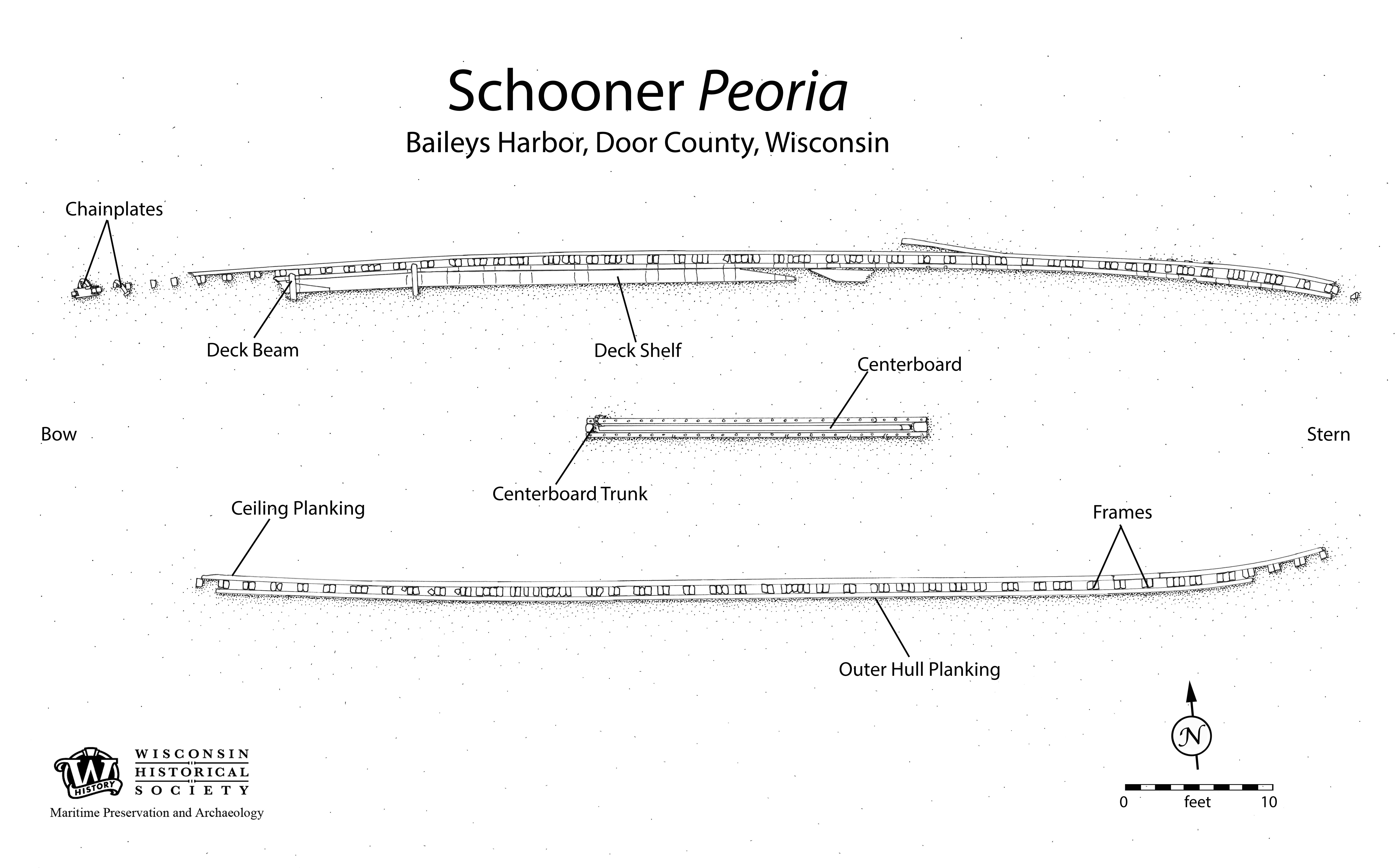
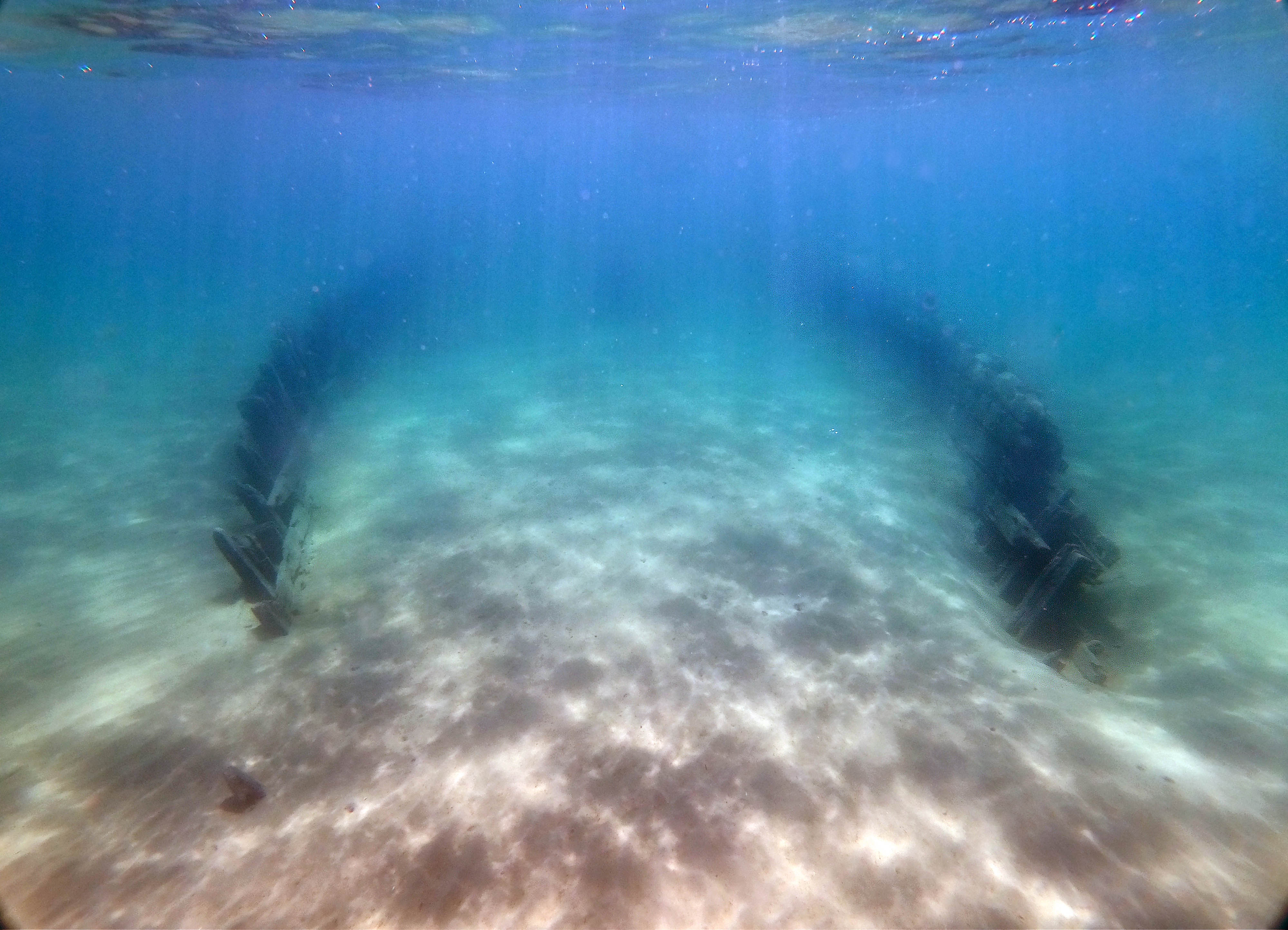
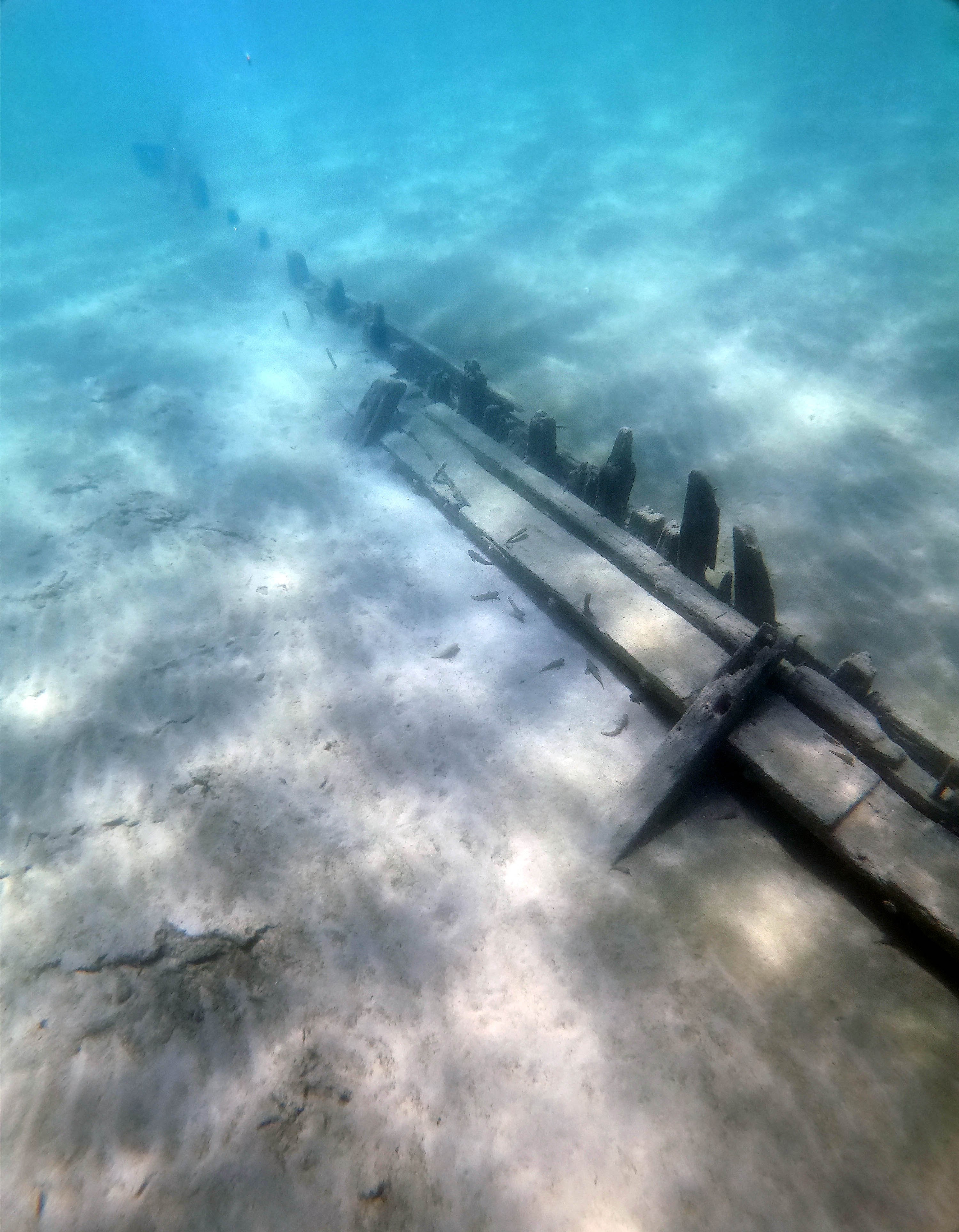
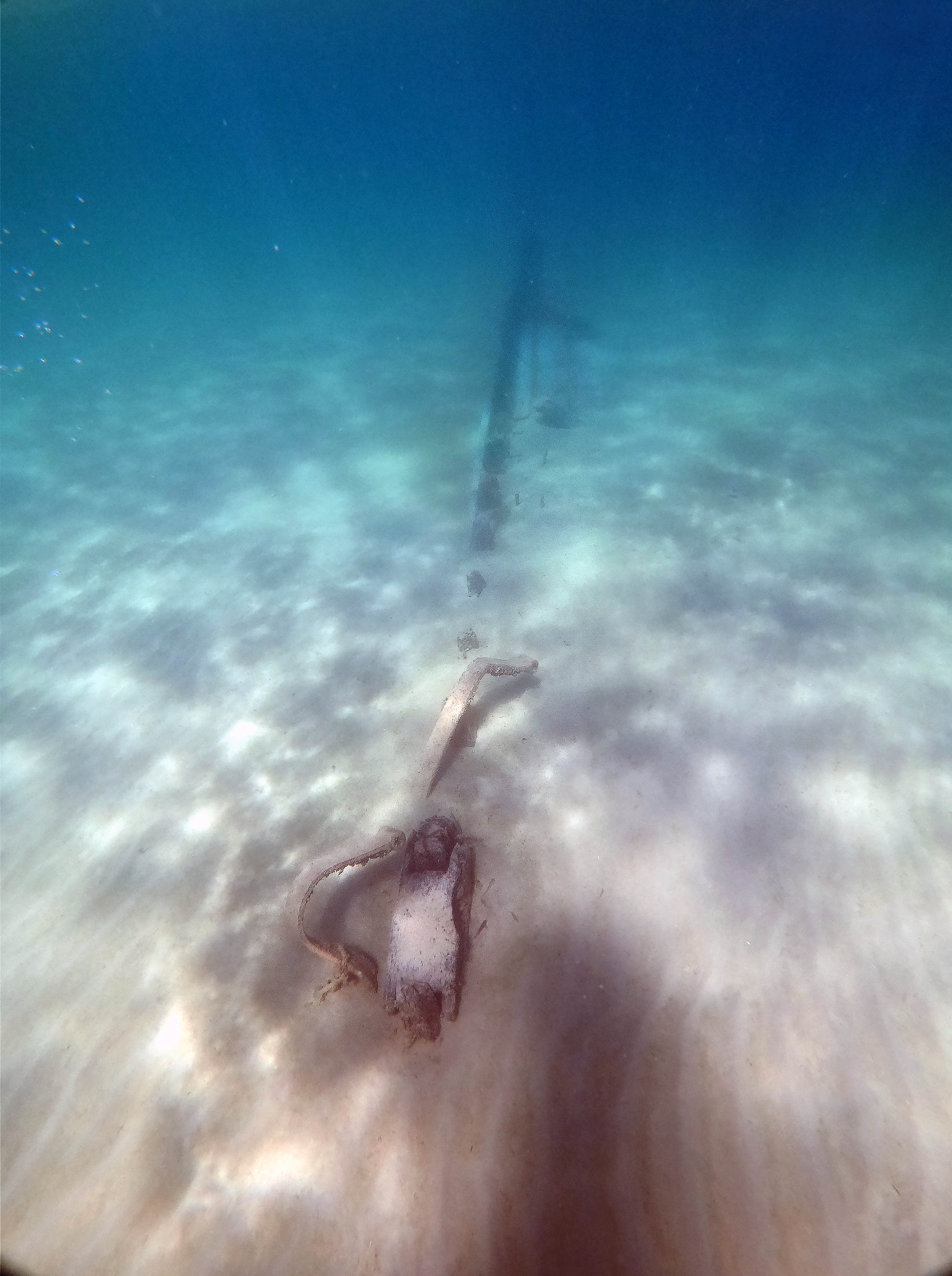
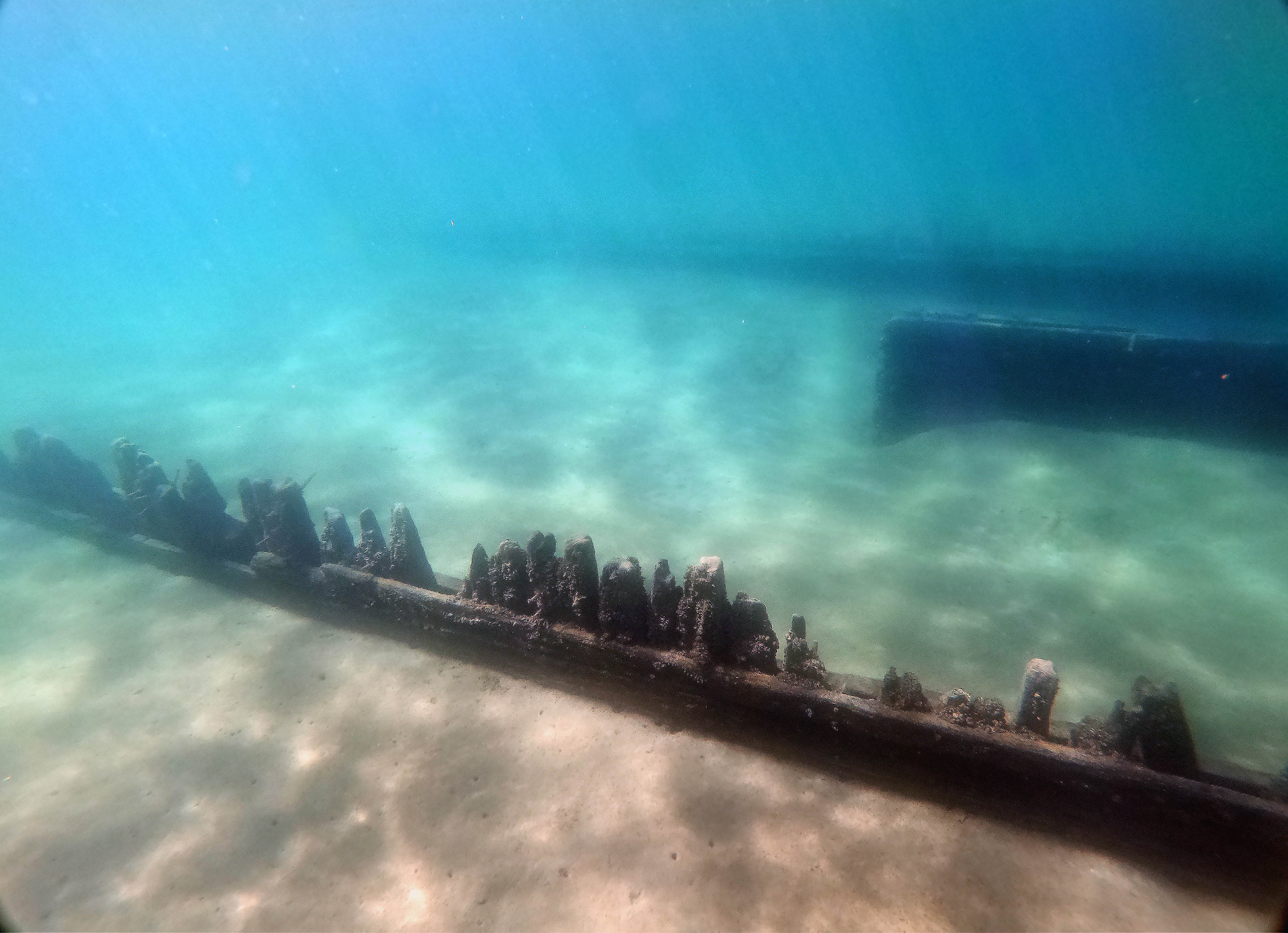
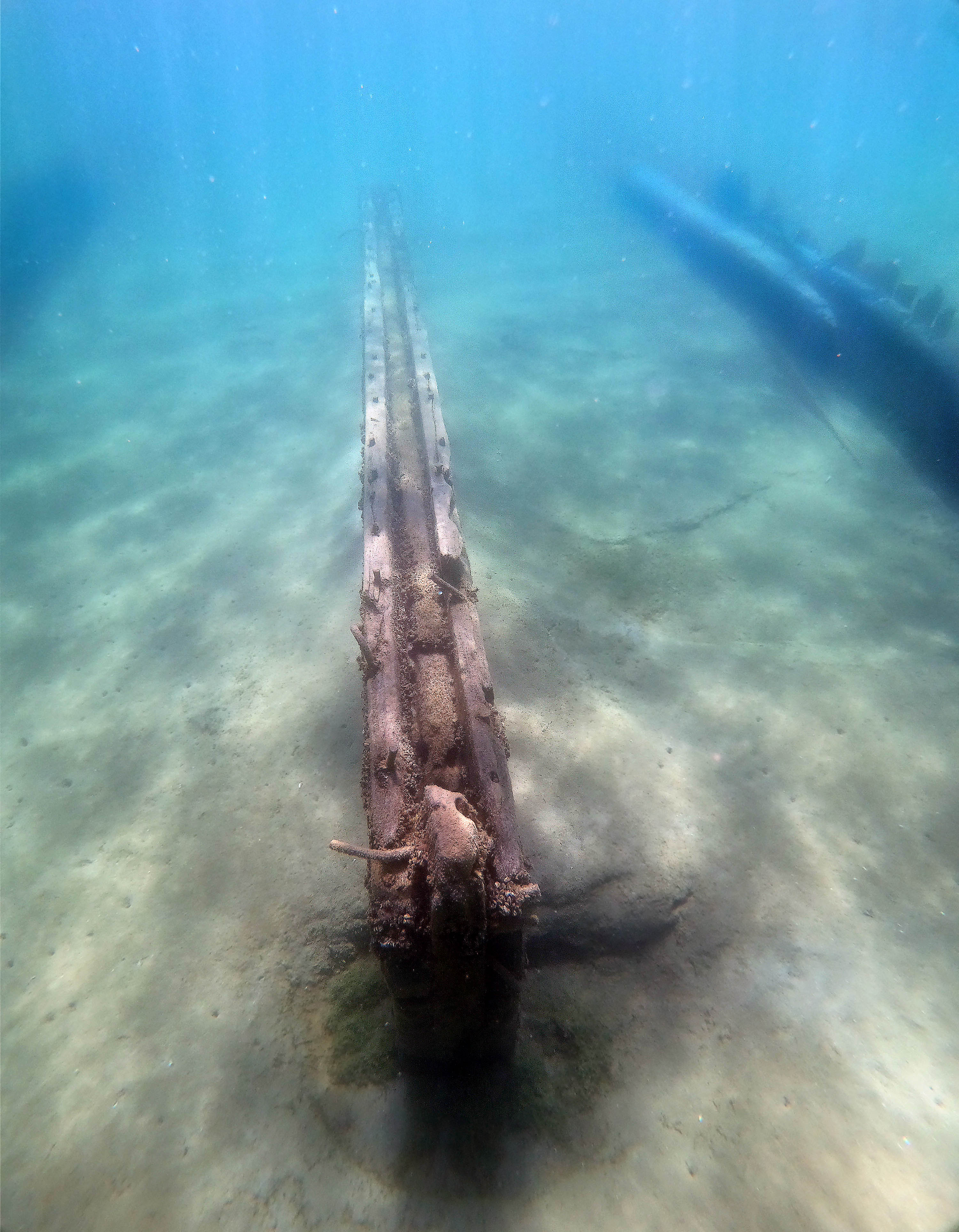
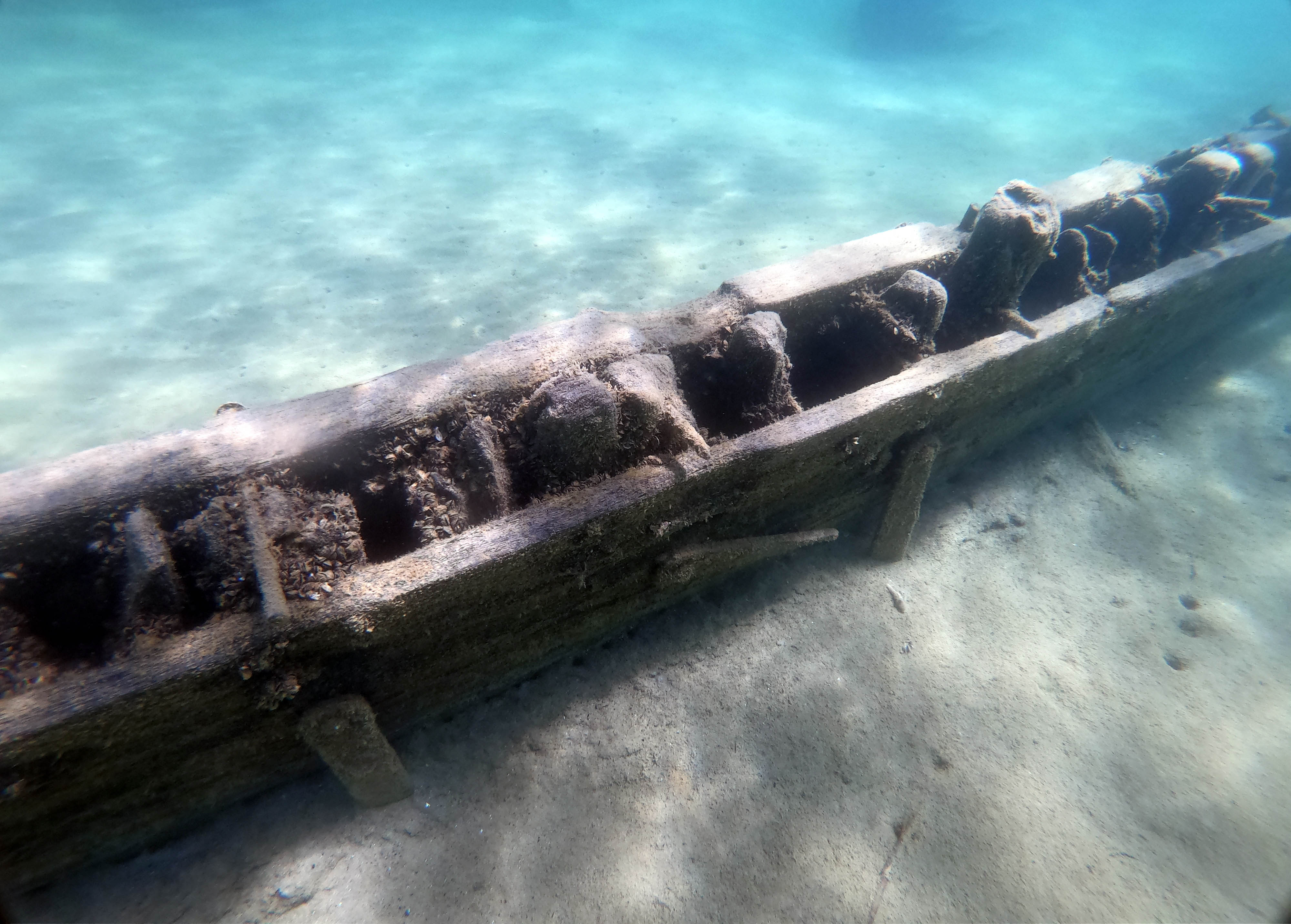
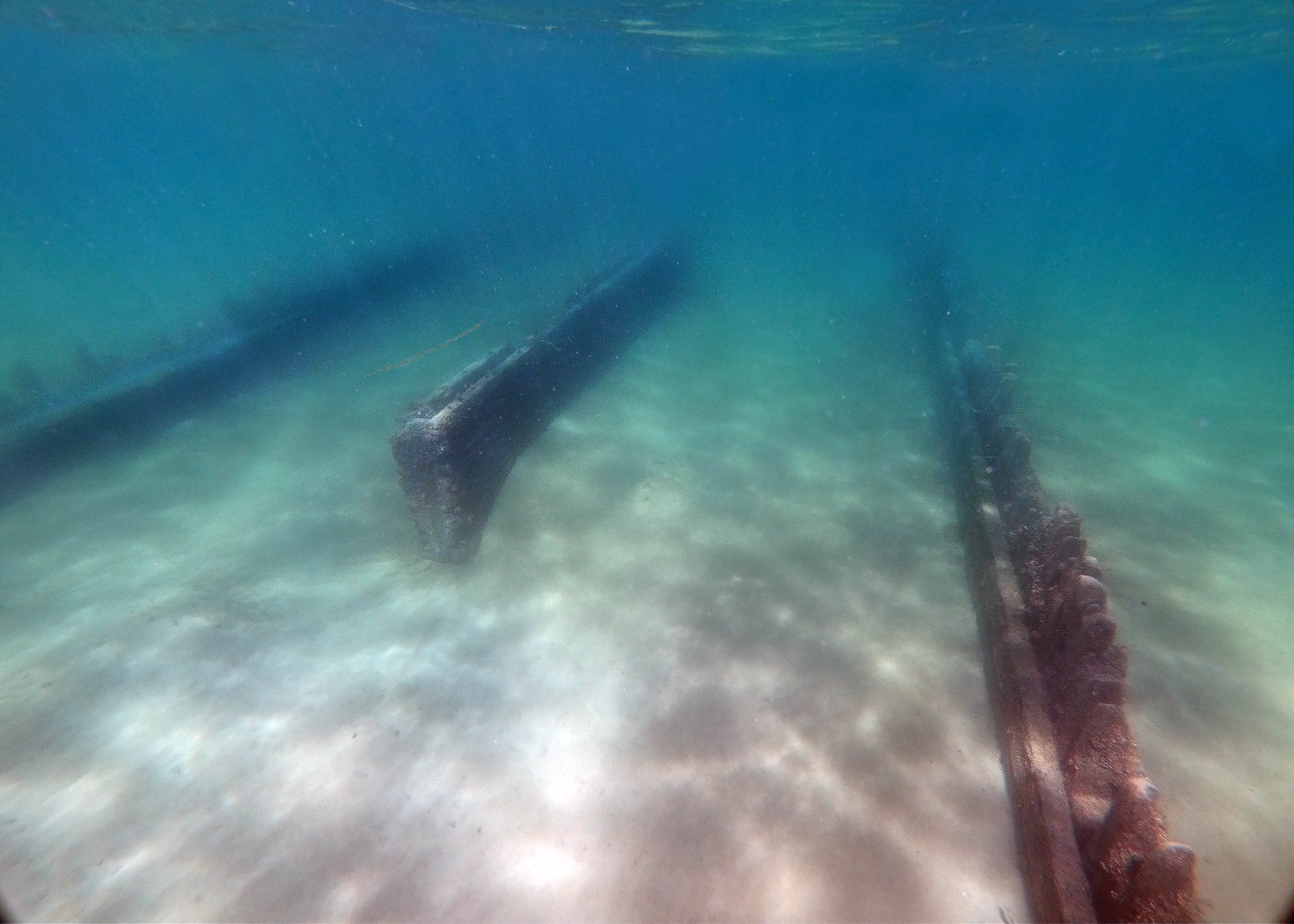
The wreck lies buried in 7 feet of water just northeast of the entrance to Baileys Harbor Marina. It lies mostly intact in the sandy bottom embedded to its deck shelf. During its sinking, the vessel quickly settled deeply into the soft (almost quicksand-like) sands of the bay. Due to the shifting nature of the sand, different amounts of the hull can be seen day-to-day. In 1994 archaeologists from the Wisconsin Historical Society (WHS) visited the site, naming it the “Ridges Rangelight Wreck,” and in 2022 WHS archaeologists labeled the site the “Baileys Harbor Beach Wreck” until the wreckage was positively identified as the
Peoria. The complete lower hull is extant but buried, and the furthest parts of the vessel's bow and stern remain buried beneath the sand. It is likely that many artifacts and hull pieces remain under the sand.

 Schooner.JPG)
 Confirmed Location
 Unconfirmed location