Amsterdam Pier
Gallery
img
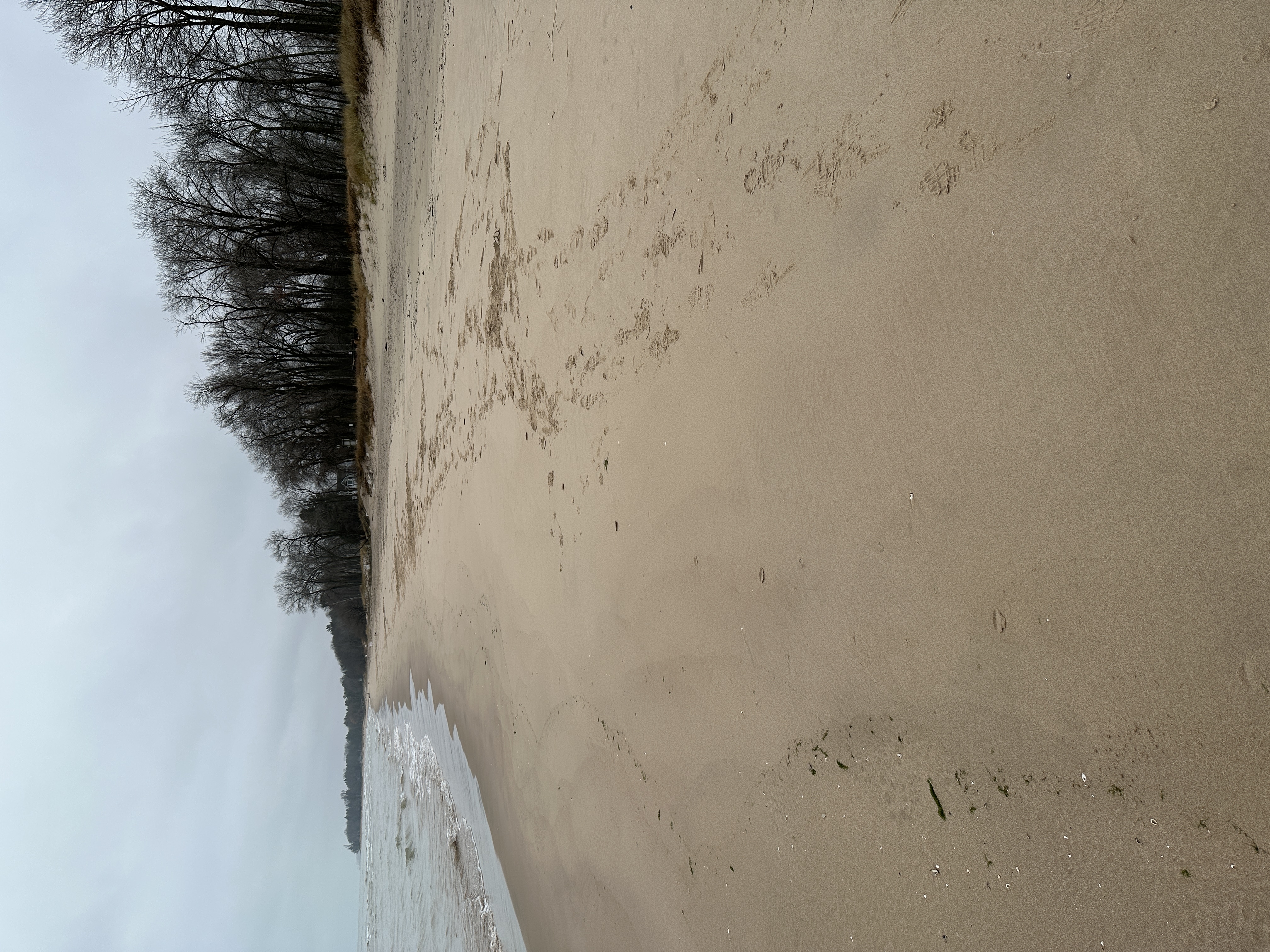
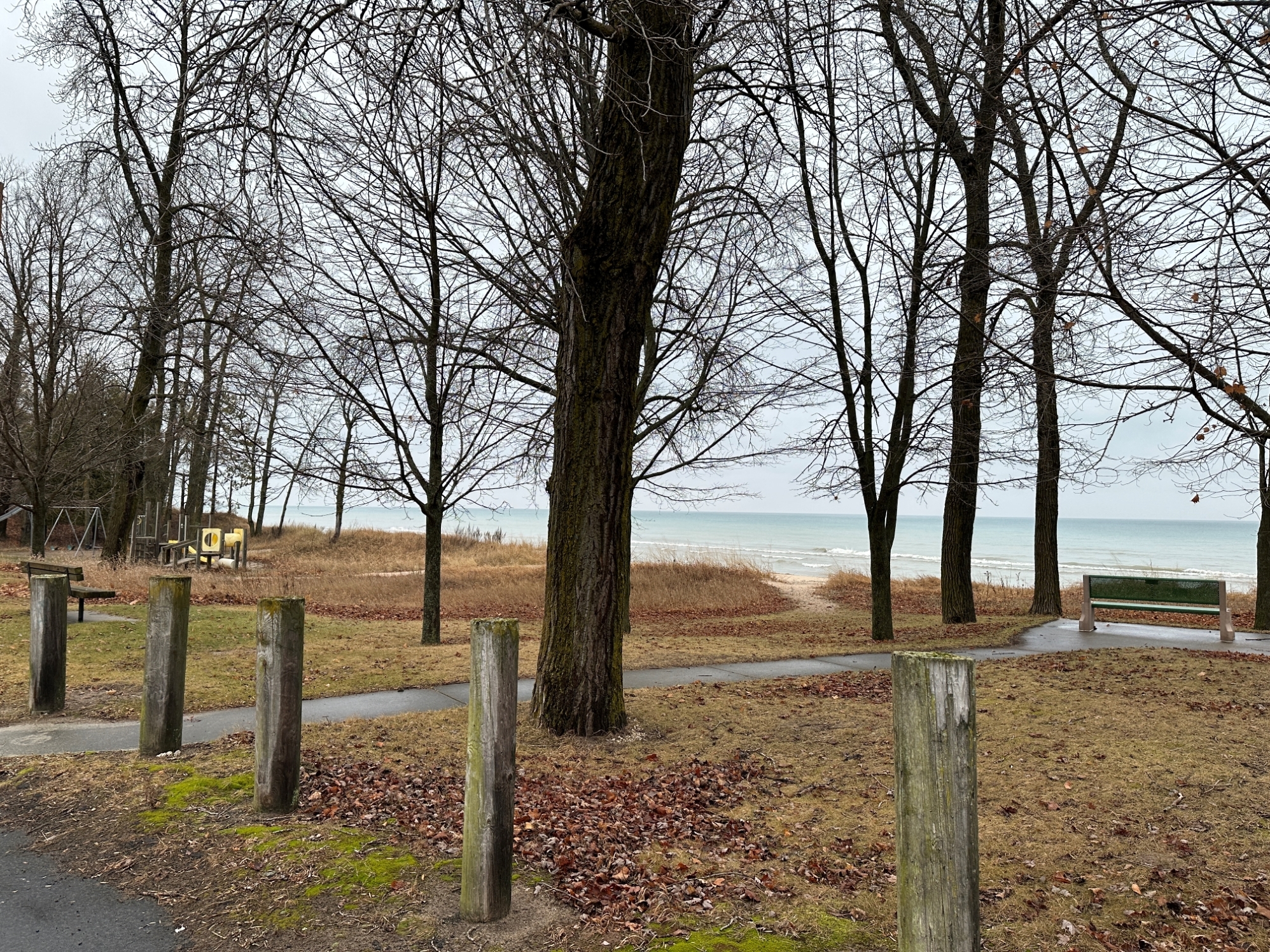
Amsterdam Park and Beach
img
Amsterdam Park and Beach
img
Map of the town of Amsterdam from "An illustrated historical atlas of Sheboygan County, Wisconsin" by G. A. Randall and Co., 1875.
img
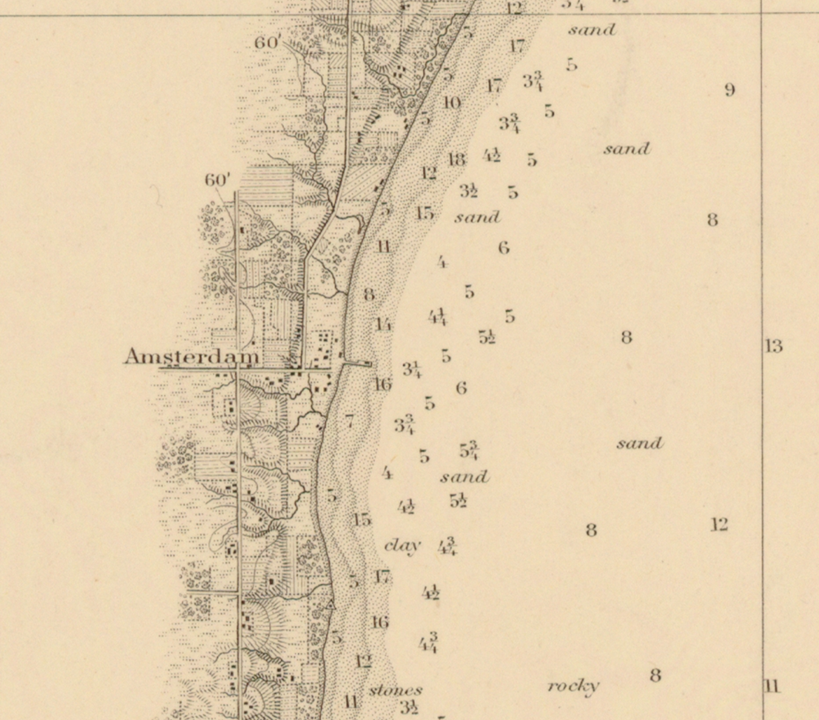
Portion of 1880 nautical chart by the U.S. Army Corps of Engineers showing the town of Amsterdam.
img
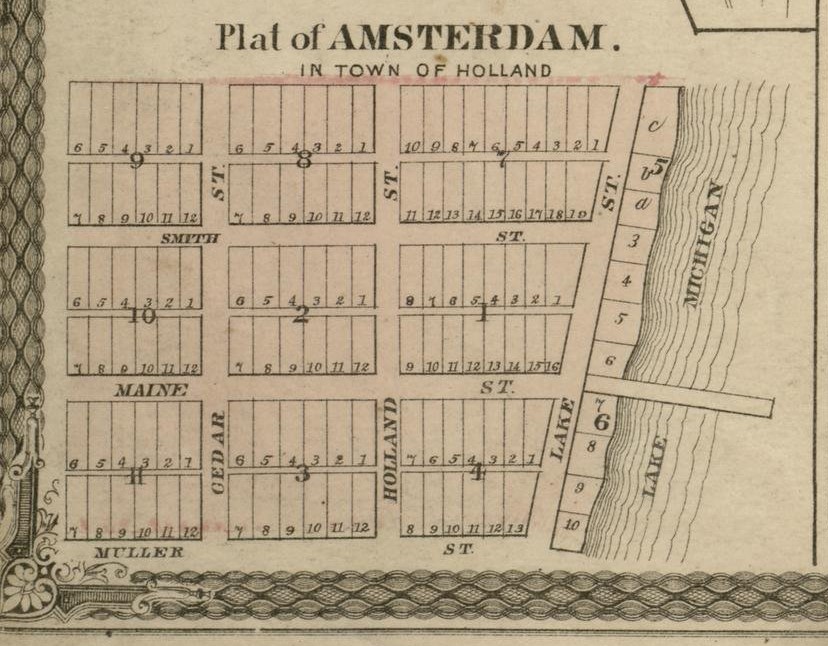
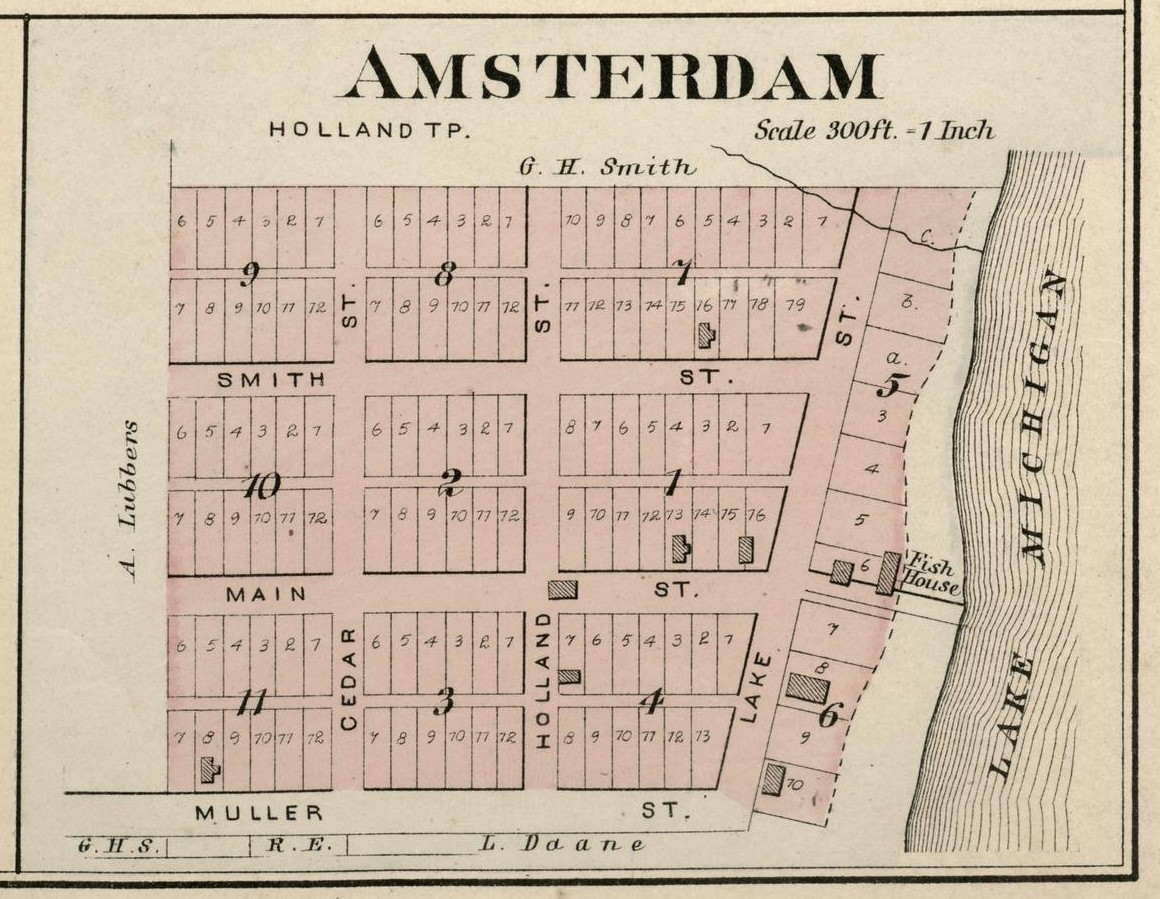
Plat map of the town of Amsterdam from "Plat book of Sheboygan County, Wisconsin" by Charles M. Foote, 1889.
img
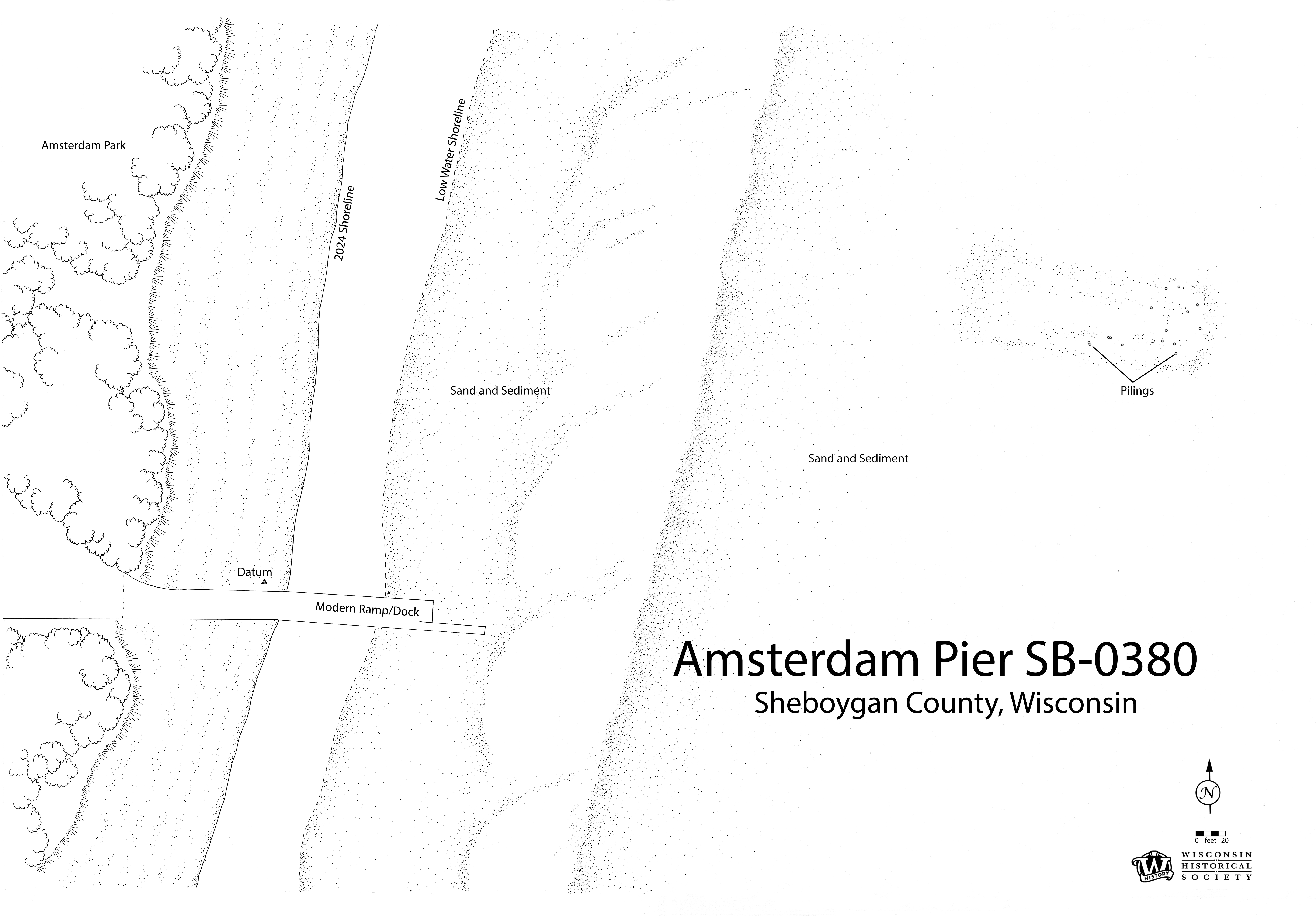
Archaeological site plan of Amsterdam.
img
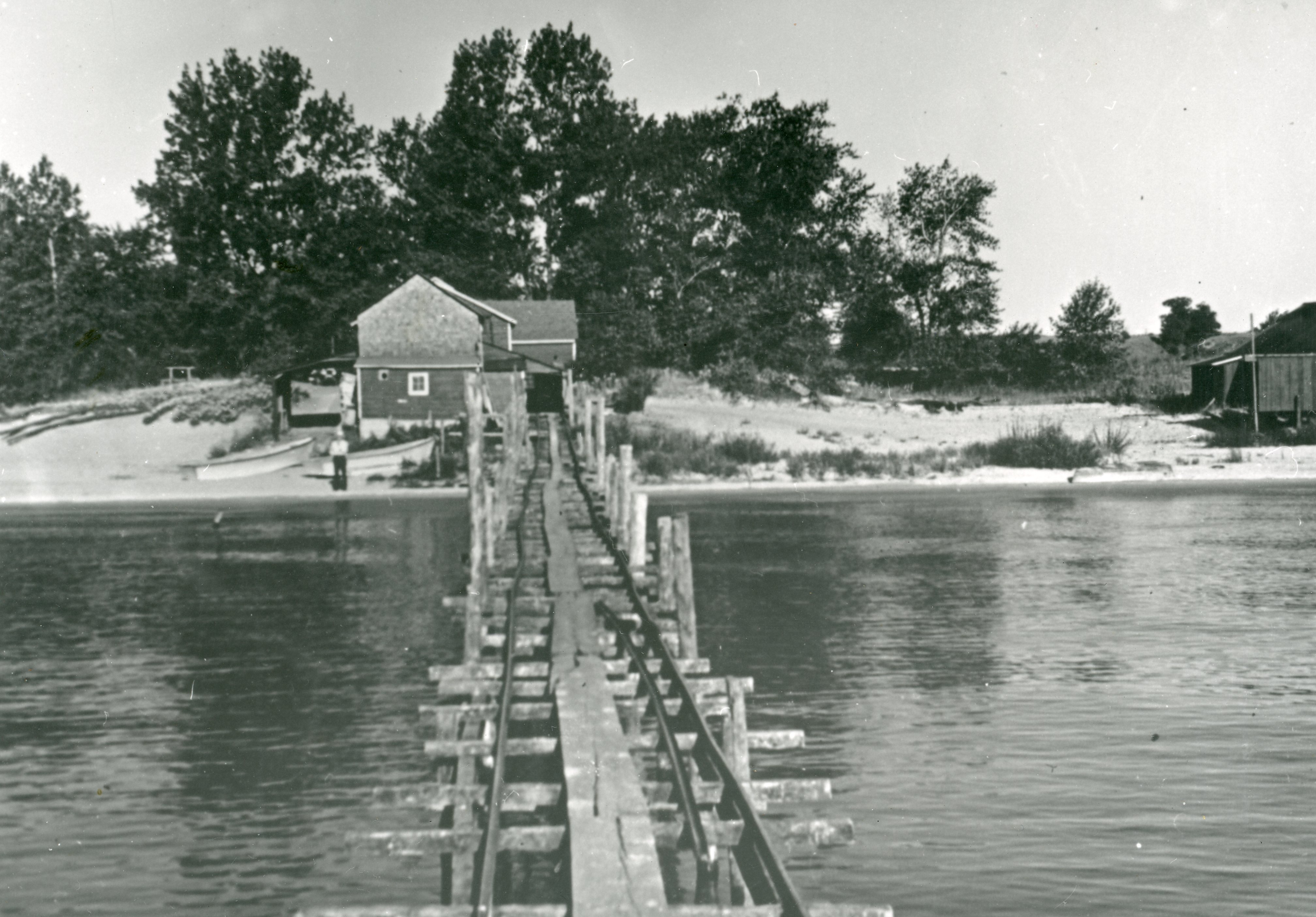
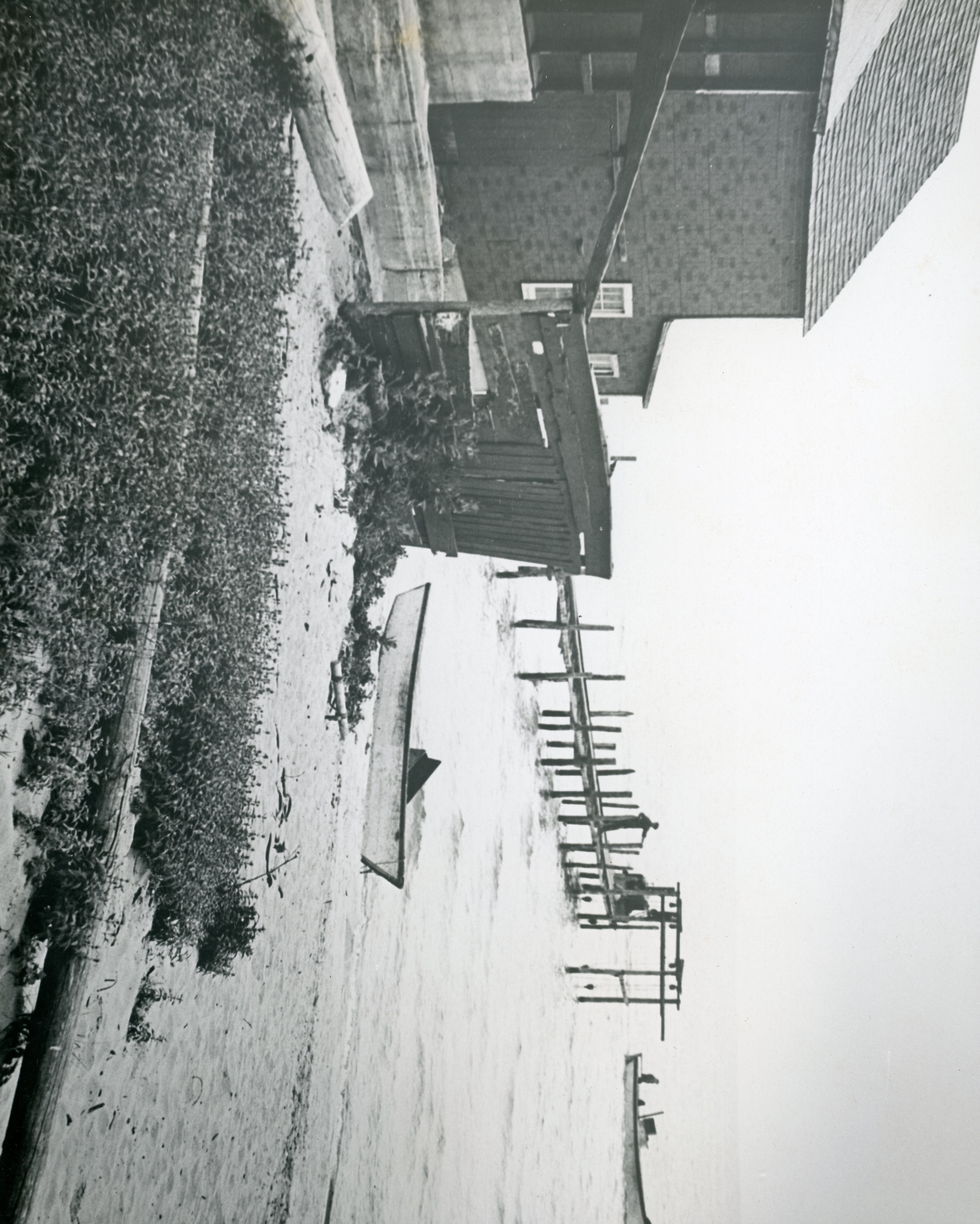
Fishing pier and shanties at Amsterdam, ca. 1930s.
img
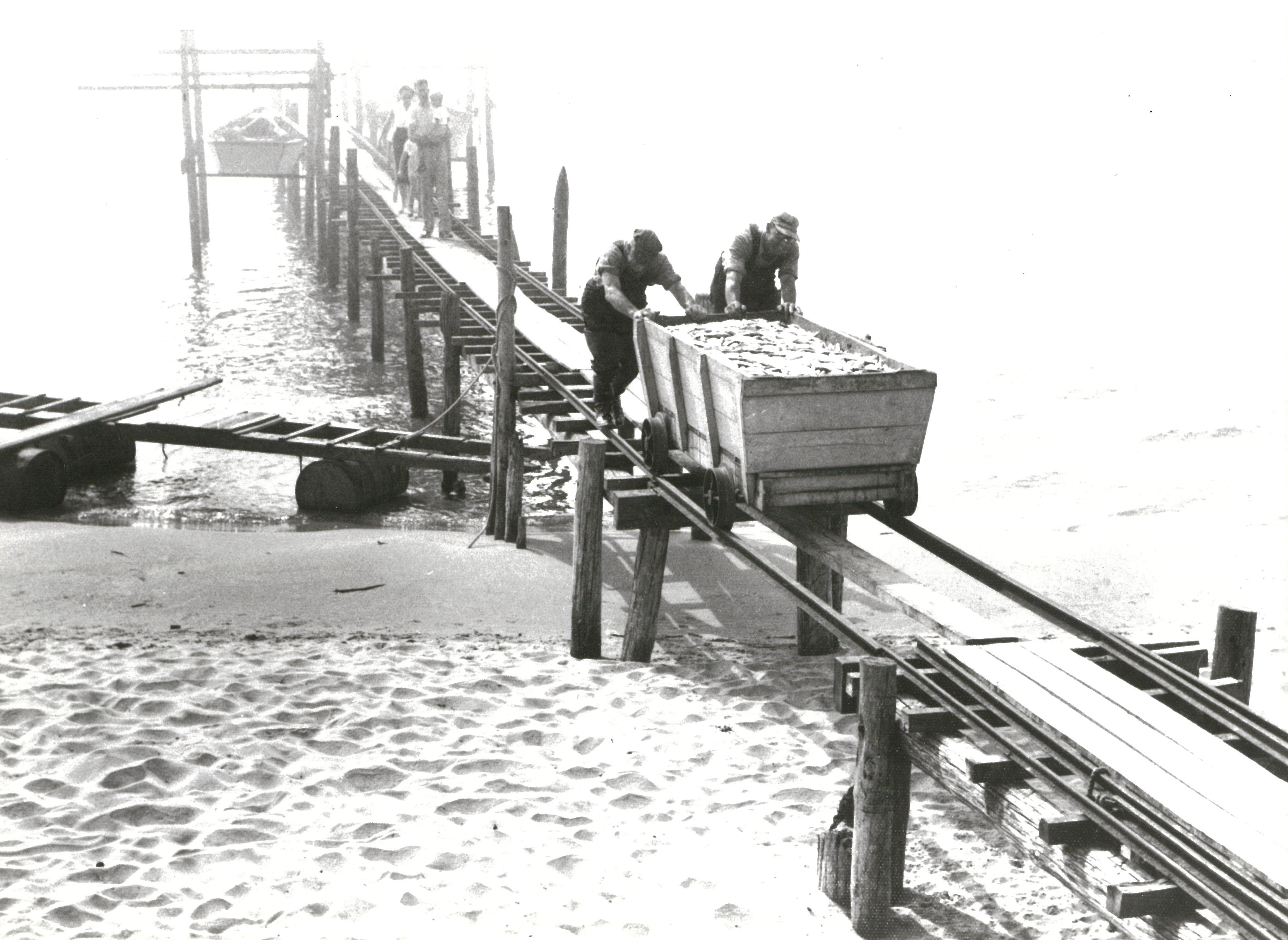
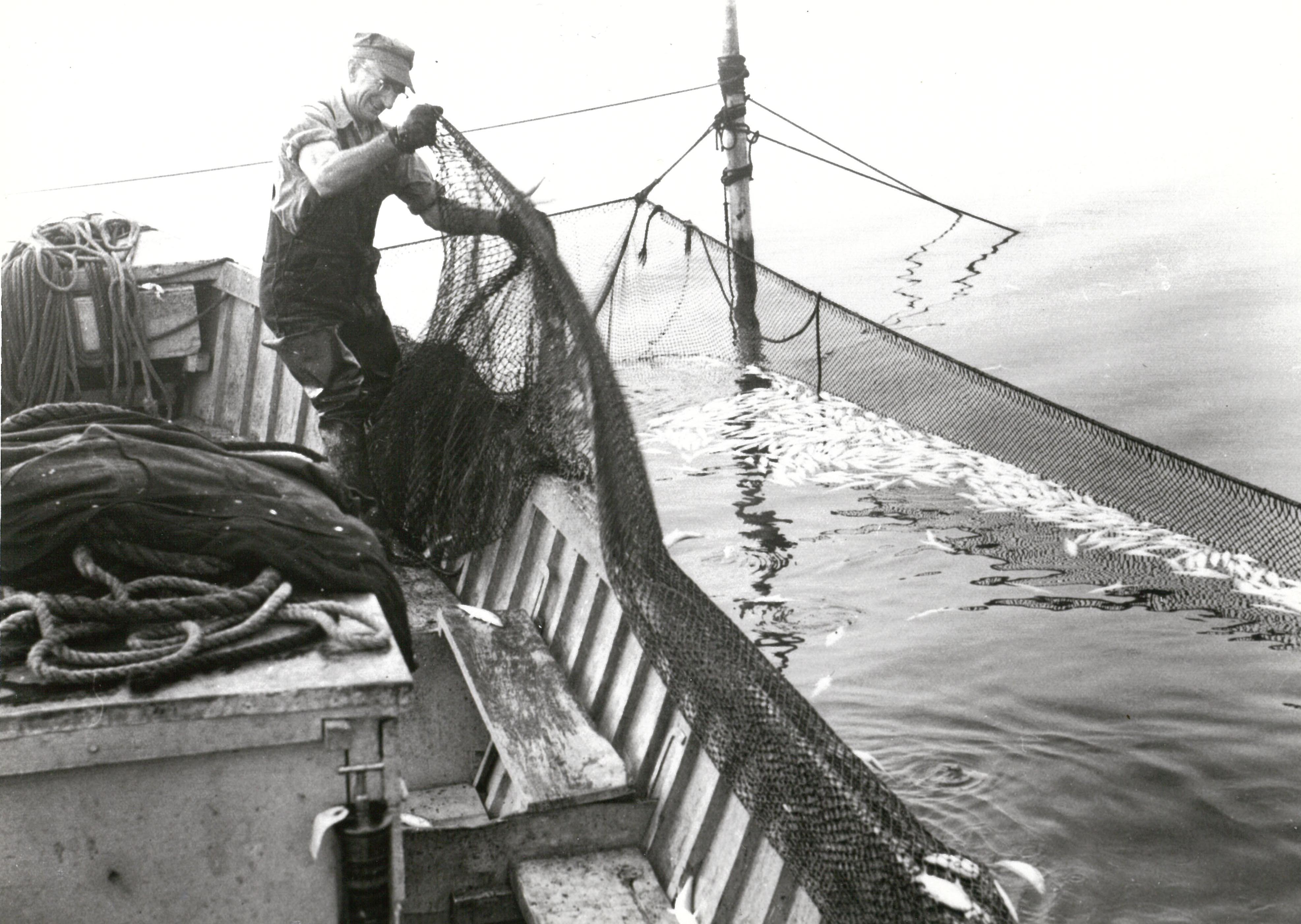
Photo of Smies Fish Company at Amsterdam in 1956. Fish are shoveled into the fish cart and pushed along the pier to the fishhouse to be prepared for the Chicago market. Photo by Vern Arendt, photographer for the Ozaukee Press, as part of a story that appeared in the Picture Journal insert of the Milwaukee Journal's September 23, 1956 issue.
 
Attraction
Description
Between 1850 and 1852, Gilbert H. Smith purchased and platted the land that would become the town of Amsterdam. Smith and his father, William, came to Wisconsin in 1847 from Pulaski, New York, near Lake Ontario. They moved to the area that would become Amsterdam and founded a fishery in 1848. Smith sold lots to local settlers and speculators, like the Holland Trading Company. Dutch immigrant Hendrik Walvoord, one of the company’s trustees, and his son Gerrett Jan Walvoord came to the area with other family members in 1849. The Walvoord family opened a general store, offering groceries and general merchandise in exchange for local products like cordwood, staves, and fish.

Exactly who built Amsterdam’s pier in 1851 is uncertain; some sources suggest the Walvoords while others credit Gilbert Smith. When completed, the pier extended 1,000 feet offshore from Main Street, now Amsterdam Road, with a water depth of 22 feet at its end, adequate for docking most vessels of the day. The pier began as a transshipment point for forestry products but also shipped out farm products and fish. Amsterdam was home to numerous fisherfolk who gained their livelihoods from Lake Michigan.

On July 11, 1856, tragedy struck the town of Amsterdam. Historical accounts vary, but early that morning Gerrett Walvoord was either hurrying to meet a government dredge that had been hired to increase the water depth at Amsterdam or he was measuring cordwood on the pier in expectation of an arriving vessel. The cordwood may have shifted and thrown Walvoord into the water as he scrambled over it. Or he may have painfully ruptured a boil on his arm, possibly by hitting it against the cordwood or pier, and fallen off the pier in shock. In either case, Walvoord was pinned underwater when several logs toppled in after him. Gerrett’s wife, Anna Maria Engel Nolton Walvoord, and Gerret’s father continued to operate the general store after his death. But other disasters soon followed. The Walvoord store burned down in January 1857 and the Walvoords did not rebuild. Another general store owned by a Mr. Wood continued to operate. In early June 1858, fire also consumed a steam sawmill at Amsterdam run by three men with surnames Thompson, Tinsler, and Watser.

Despite these setbacks, Amsterdam appears to have flourished for decades. There were at least two general stores, a blacksmith shop, a tavern, a cooperage, and a school at the town’s height. In 1872, when the Milwaukee, Lake Shore and Western Railway became the first railroad in the area, the town’s fortunes changed. The railroad was built inland, passing through nearby Cedar Grove. This new shipping mode, combined with depleted timber stocks, reduced the need for lake shipping. Several Amsterdam residents moved to Cedar Grove. But not everyone left, especially those who fished the waters of Lake Michigan.

In addition to the original Smith family operation, many other fishing companies operated out of Amsterdam. Family names associated with fishing in the area include DeWitt, DeZoute, Grotenhuis, Huibregtse, Ingelse, Kobes, Kolste, Moennig, Nath, Roerdink, Smies, Stokdyk, Van Der Jagt, VanDrieste, Weiskamp, Westerbeke, and Zurmond. The sons of Gilbert H. Smith – Herbert, Delos, and Roy – created a local fishing dynasty, establishing the famous Smith Brothers Fish Company in nearby Port Washington.

On March 18, 1906, while fishing off Amsterdam on the Smith Brothers Fishery tug Tessler, Captain Delos Smith and his crew rescued over 60 people from the burning Goodrich steamer Atlanta and then beached the burning steamer on shore just north of Amsterdam. Everyone onboard Atlanta was saved, except for deckhand Michael Hickey who tried to jump from the steamer onto the tug. Hickey misjudged the distance and fell to his death between the vessels.

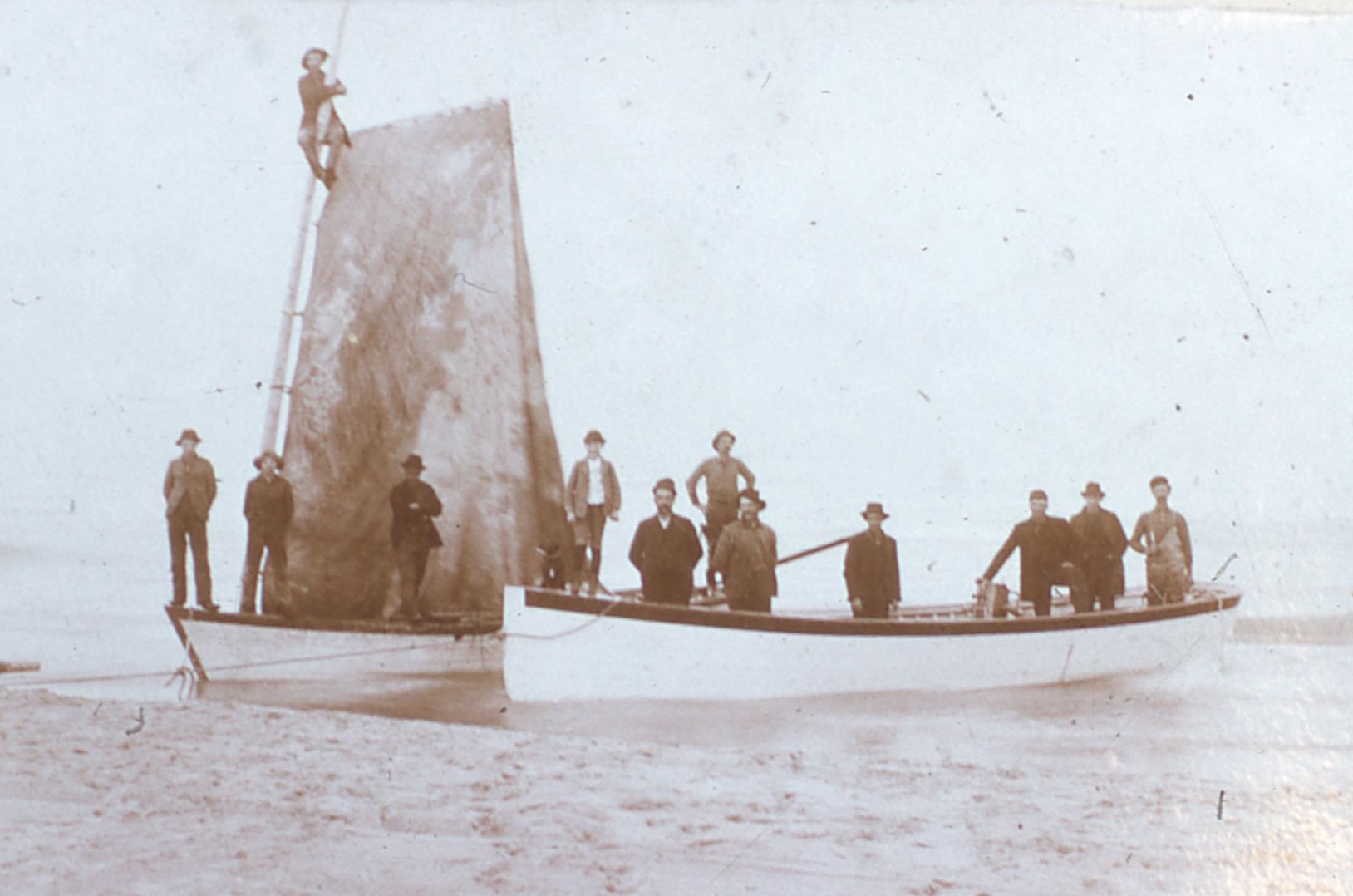
Over time, as stands of timber dwindled, fishing became the area’s main occupation. White fish and sturgeon were abundant early in the community’s history. The earliest days of fishing in Amsterdam were conducted close to shore using sailboats and seine nets, but as fish stocks declined, fisherfolk moved from seine net fishing near shore to pound-net fishing, which allowed harvesting in deeper waters. Sailboats predominated at first, but motorboats soon became common. Fisherfolk drove their pound net stakes into the lakebed first with steam-power and then with gasoline powered pile drivers. White fish were no longer prevalent, but chubs, herring, and trout still filled the nets. In some years, storms destroyed pound nets and reduced hauls. Other years resulted in record breaking catches, such as the 6,000-lb daily catch recorded by the Stokdyk Brothers in April 1915 and the 7,000-lb daily catches of trout reported by the Smies family in 1942.

As fishing stocks declined, particularly after the introduction of the sea lamprey into Lake Michigan in the 1930s, the once thriving fishing industry around Amsterdam gradually collapsed. Today, all that remains at the former site of the town of Amsterdam is a small park and picturesque beach with a playground, picnic shelter, and boat ramp.
 
Map
 
Nearby
© 2026 - Wisconsin Sea Grant, Wisconsin Historical Society