Ronksville Maritime Trails Marker
Gallery
img
Ronksville Maritime Trails Marker
img
Ronksville Maritime Trails Marker
img
Ronksville Maritime Trails Marker
img
Ronksville Maritime Trails Marker
 
Attraction
Description
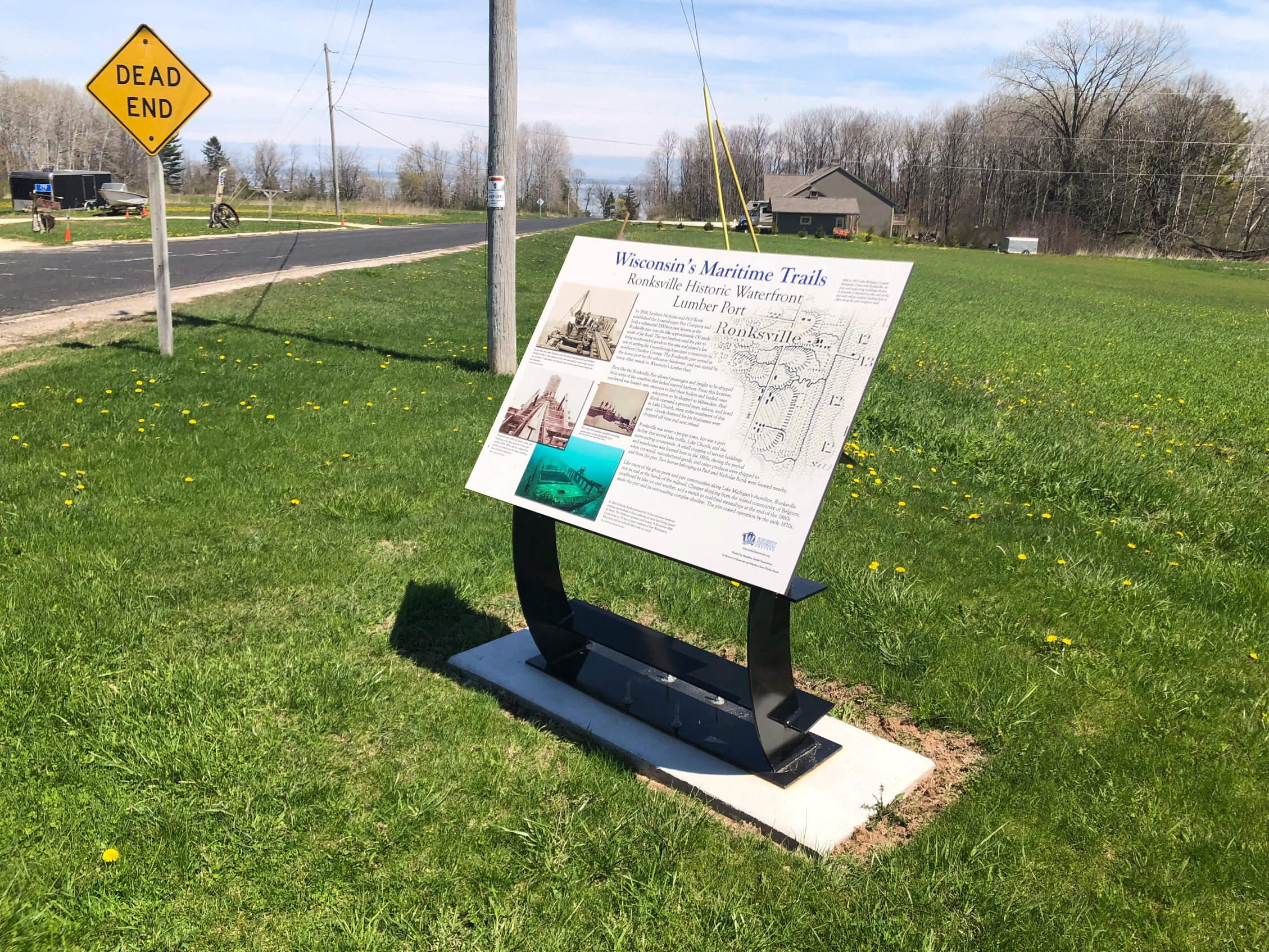
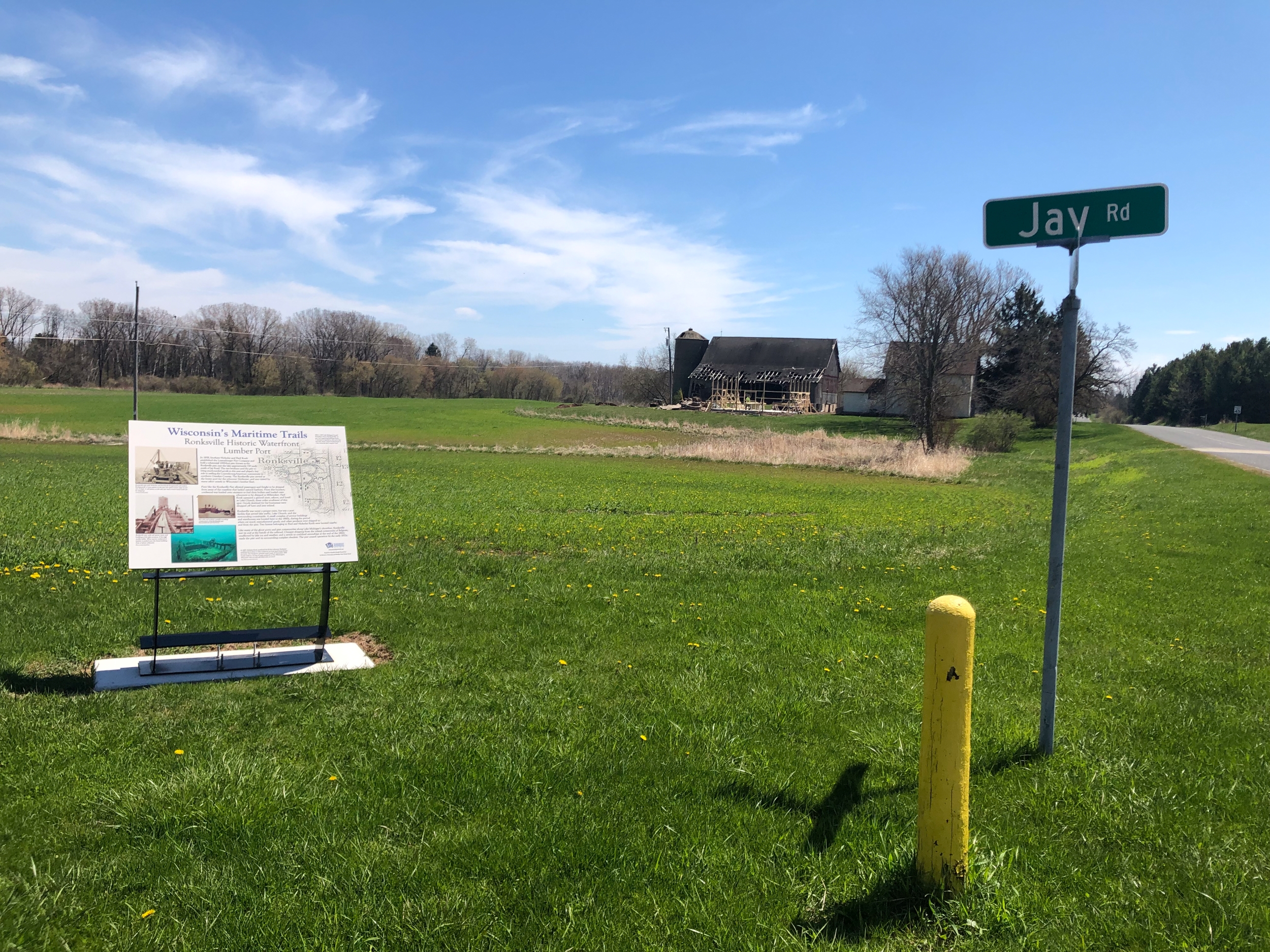
Marker is located at the southeast corner of the intersection of Jay Road and Sauk Trail Road northeast of Belgium and southeast of Cedar Grove.
----------
Marker Narrative Text:
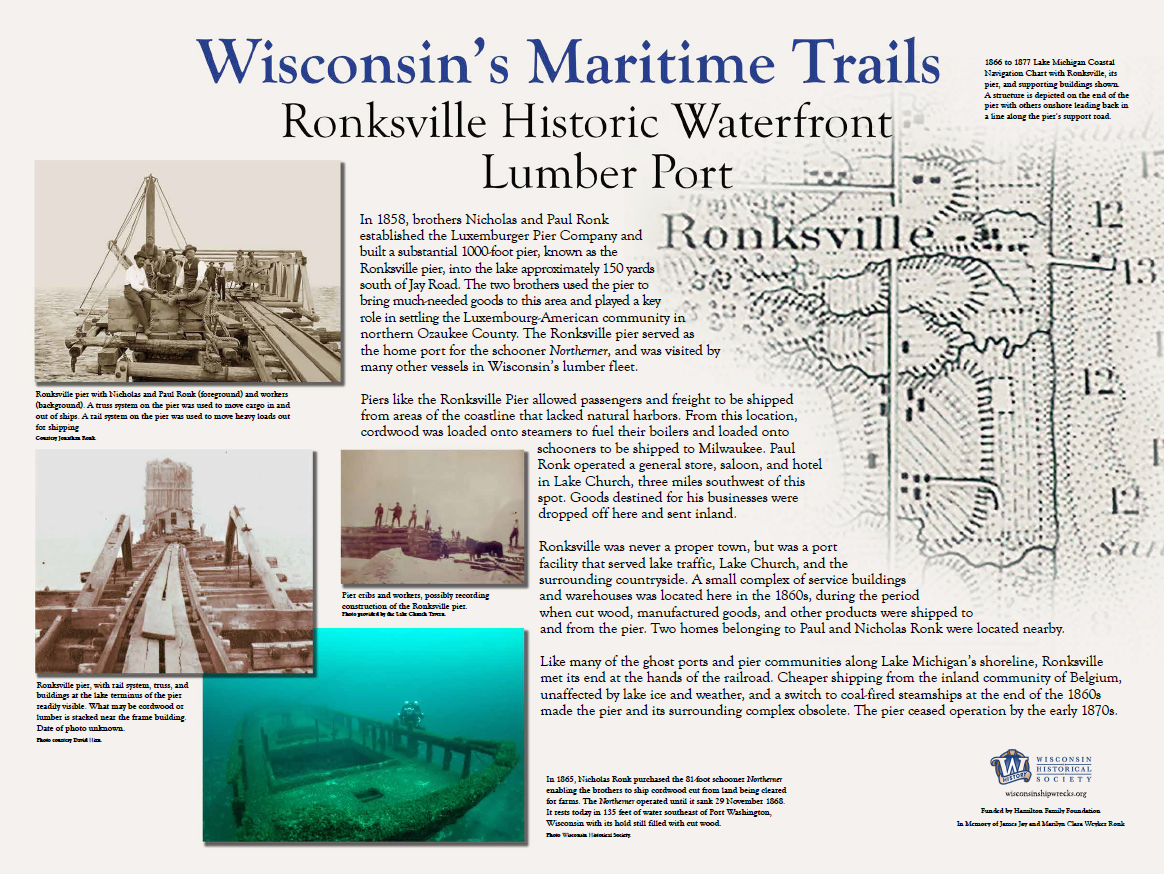
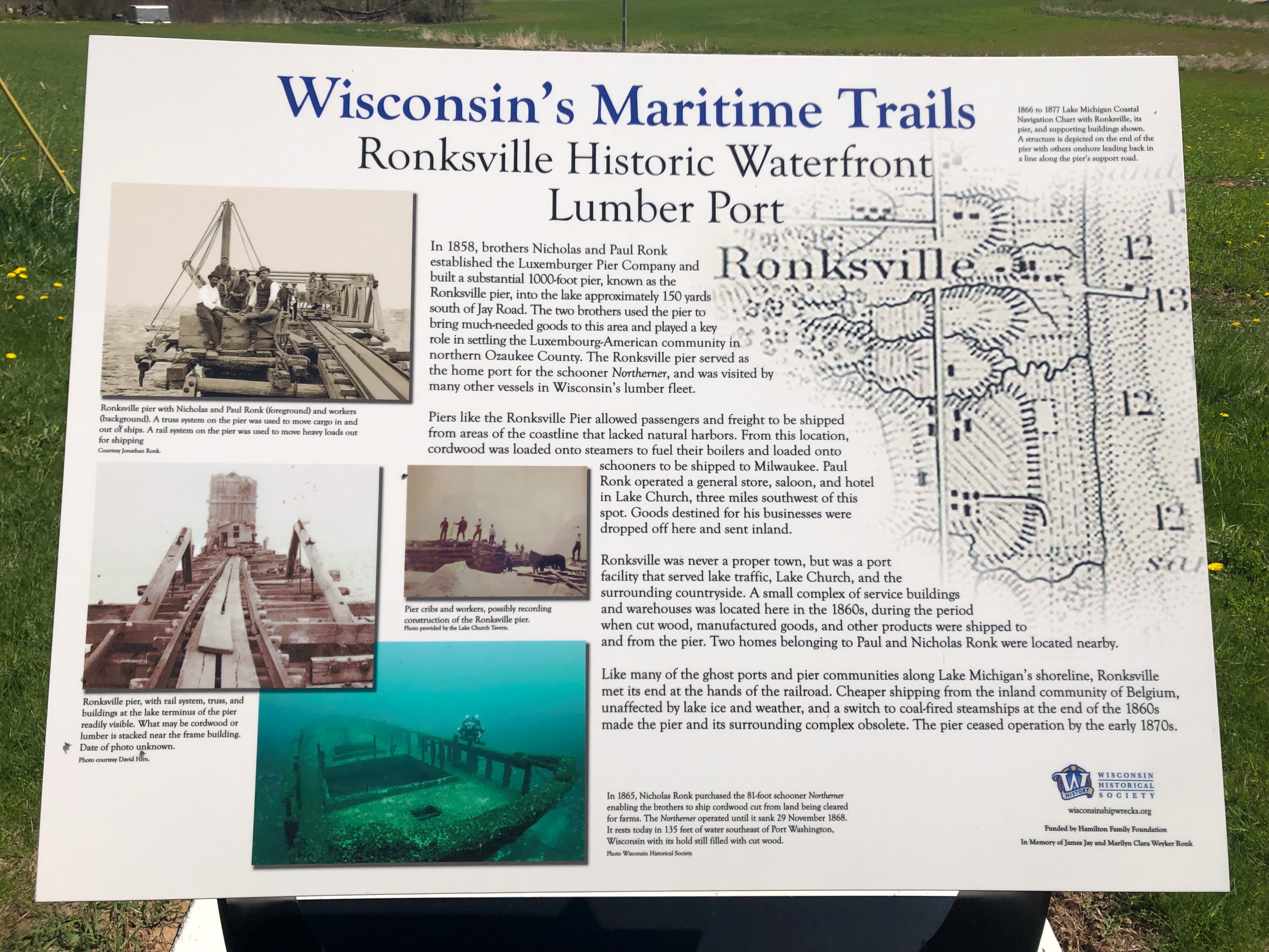
Wisconsin's Maritime Trails
Ronskville Historic Waterfront
Lumber Port


In 1858, brothers Nicholas and Paul Ronk established the Luxemburger Pier Company and built a substantial 1000-foot pier, known as the Ronksville pier, into the lake approximately 150 yards south of Jay Road. The two brothers used the pier to bring much-needed goods to this area and played a key role in settling the Luxembourg-American community in northern Ozaukee County. The Ronksville pier served as the home port for the schooner Northerner, and was visited by many other vessels in Wisconsin’s lumber fleet.

Piers like the Ronksville Pier allowed passengers and freight to be shipped from areas of the coastline that lacked natural harbors. From this location, cordwood was loaded onto steamers to fuel their boilers and loaded onto schooners to be shipped to Milwaukee. Paul Ronk operated a general store, saloon, and hotel in Lake Church, three miles southwest of this spot. Goods destined for his businesses were dropped off here and sent inland.

Ronksville was never a proper town, but was a port facility that served lake traffic, Lake Church, and the surrounding countryside. A small complex of service buildings and warehouses was located here in the 1860s, during the period when cut wood, manufactured goods, and other products were shipped to and from the pier. Two homes belonging to Paul and Nicholas Ronk were located nearby.

Like many of the ghost ports and pier communities along Lake Michigan’s shoreline, Ronksville met its end at the hands of the railroad. Cheaper shipping from the inland community of Belgium, unaffected by lake ice and weather, and a switch to coal-fired steamships at the end of the 1860s made the pier and its surrounding complex obsolete. The pier ceased operation by the early 1870s.
 
Map
 
Nearby
© 2026 - Wisconsin Sea Grant, Wisconsin Historical Society