Service History
Montgomery was initially built in 1853 by John Oades in Clayton, New York for merchants John N. Fowler and Henry Esselstyn as the barkentine
Northern Light. It operated in the Great Lakes grain and lumber trades.
Northern Light received sparse notice from the newspapers throughout its career, and an identically named Canadian barkentine only muddles the historical thread further.
Northern Light filled with water and rolled over on July 18, 1857. It was raised and repaired, and immediately put back in service. In 1865
Northern Light was rebuilt by Simon G. Johnston to add a second centerboard, and it was improved and lengthened, leading to it's renaming as
Montgomery.
Montgomery continued to operate in the Great Lakes grain and lumber trade with little issue and it was re-rigged as a schooner in 1881.
Beginning in 1882,
Montgomery began carrying iron ore. For this service it was towed by the tug
Niagara.
Montgomery was sold in 1887 and the ship focused on shipping ore to Toledo, Buffalo, and various ports in Wisconsin. A series of accidents occurred in 1887; the ship's foremast was carried away in October 29, and it grounded and filled with water on November 25.
Final Voyage
On the morning of November 5, 1890, while en route to Sheboygan with a cargo of coal,
Montgomery grounded during a gale and immediately filled with water. Despite flying distress colors all day, patrolmen did not sight the stranded ship. The tug
Sheboygan came to the ship's assistance the following day but failed to get the schooner free. The ship was deemed a total loss a few days later. The ship was stripped on November 9. No lives were lost in the incident.
Today
The location of the
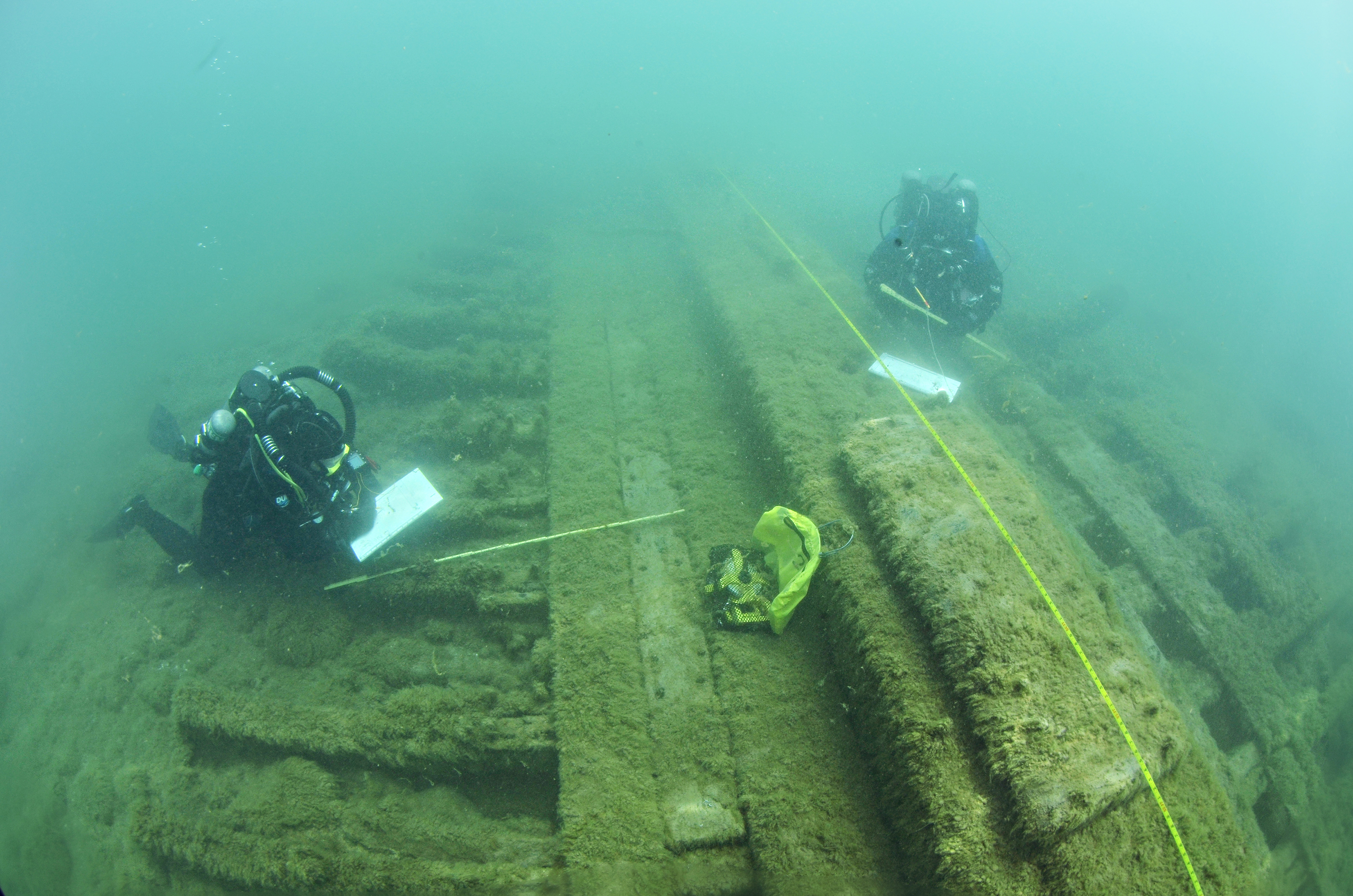
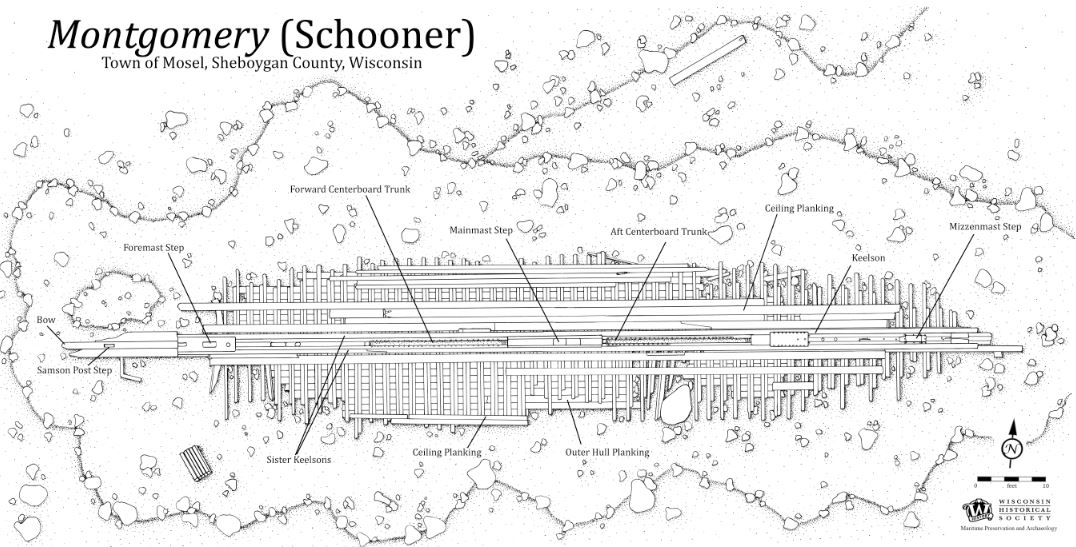
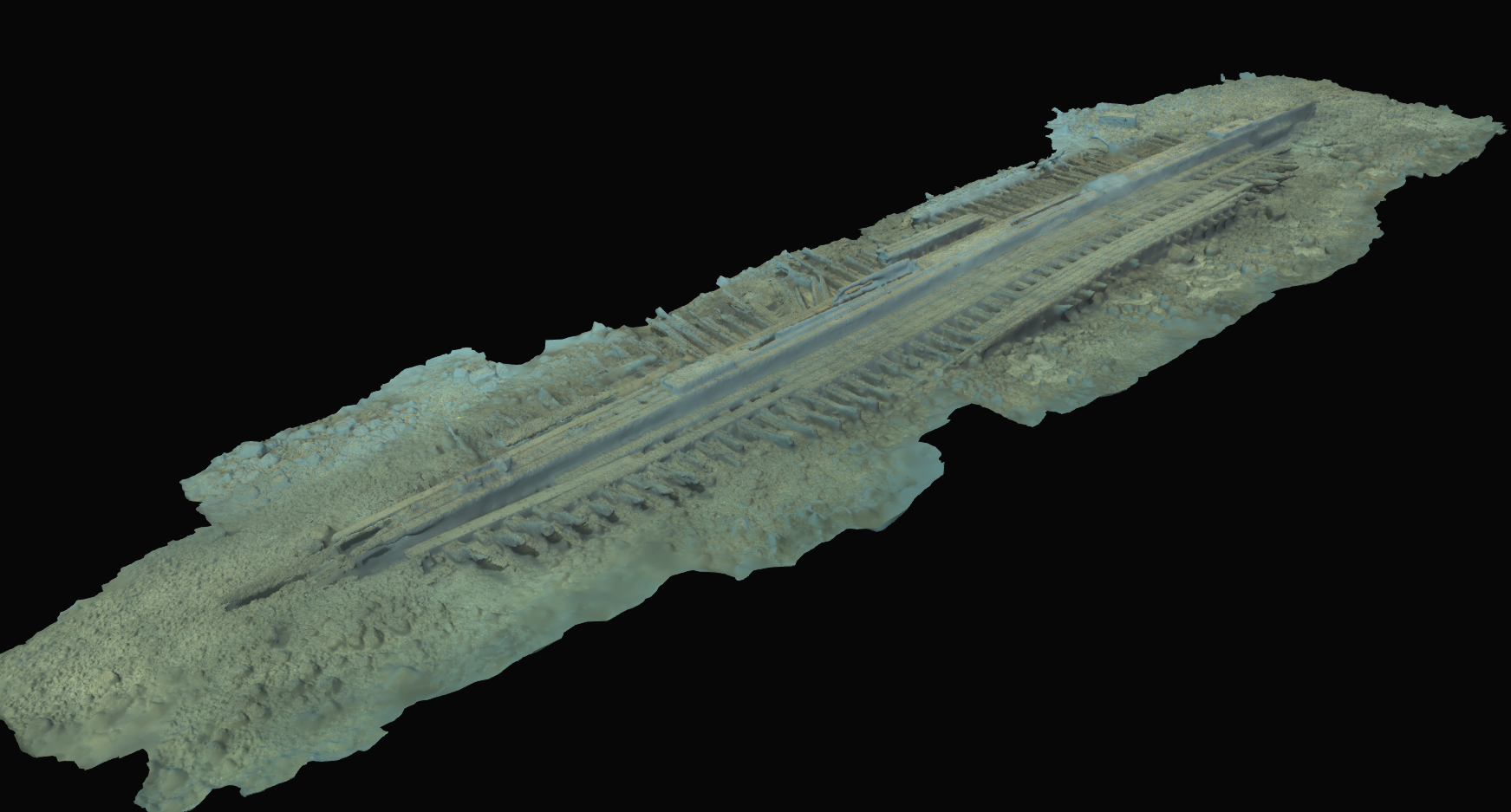
Montgomery site was forgotten until 1958 when skin divers, stationed at Camp Haven, located the wreckage and dove on it in their spare time. The site became popular with divers in the 1970s; unfortunately, the exact location of the site was lost in the intervening years. The site was brought to the attention of the Wisconsin Historical Society in June of 2015 by Steve Radovan but was not located until 2018. WUAA volunteers and Wisconsin Historical Society archaeologists documented the wreck in June 2018.
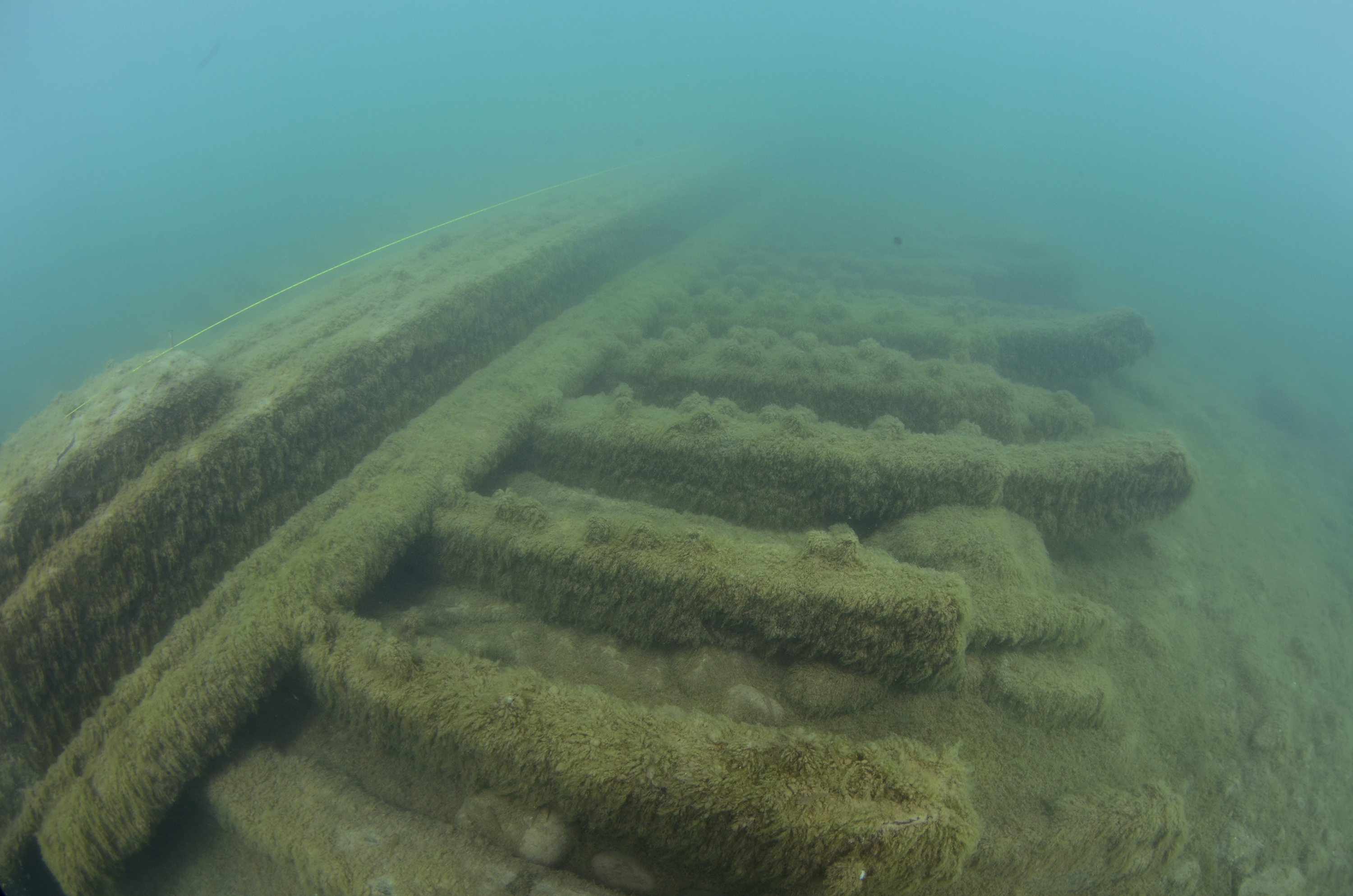
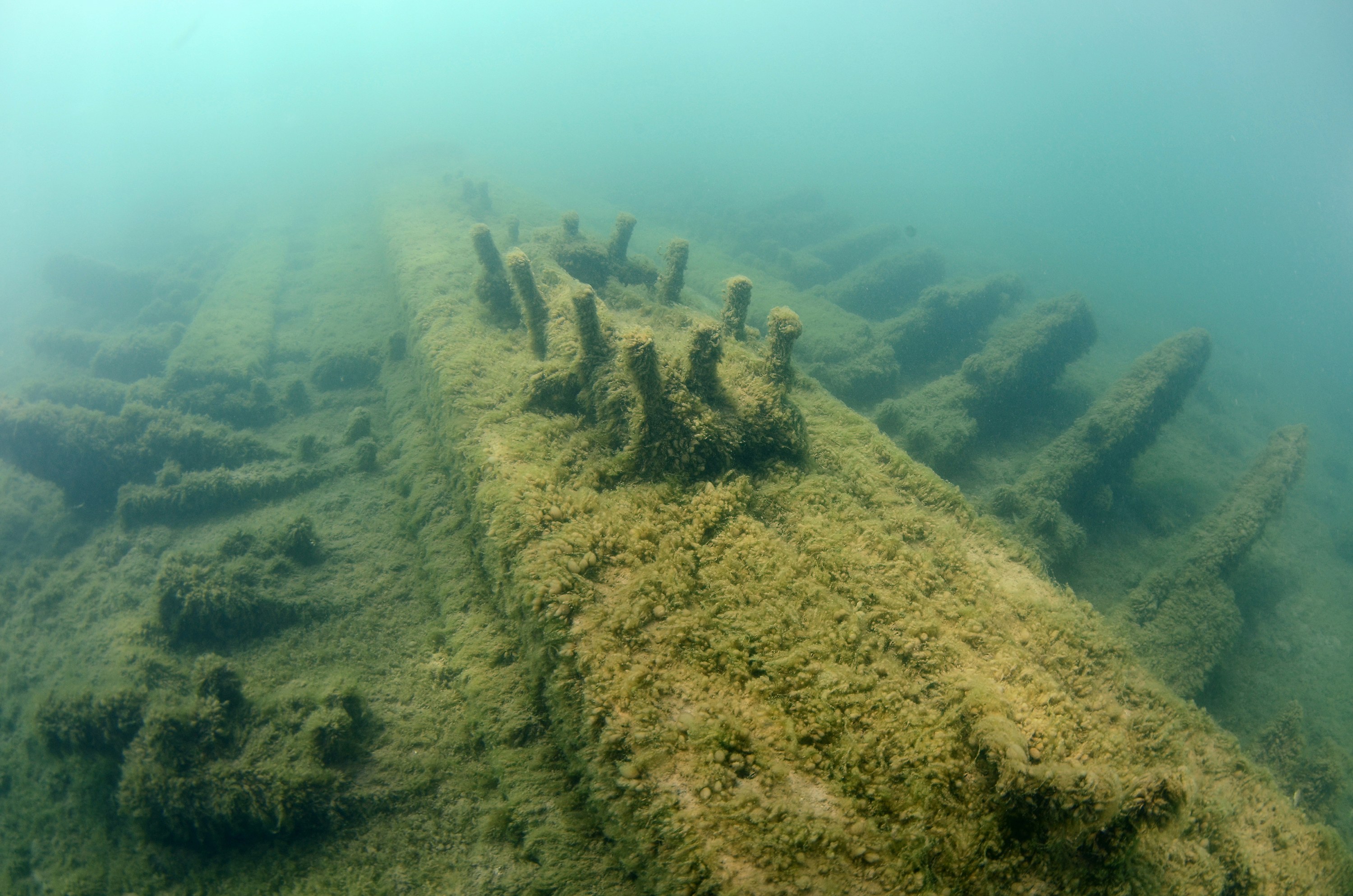
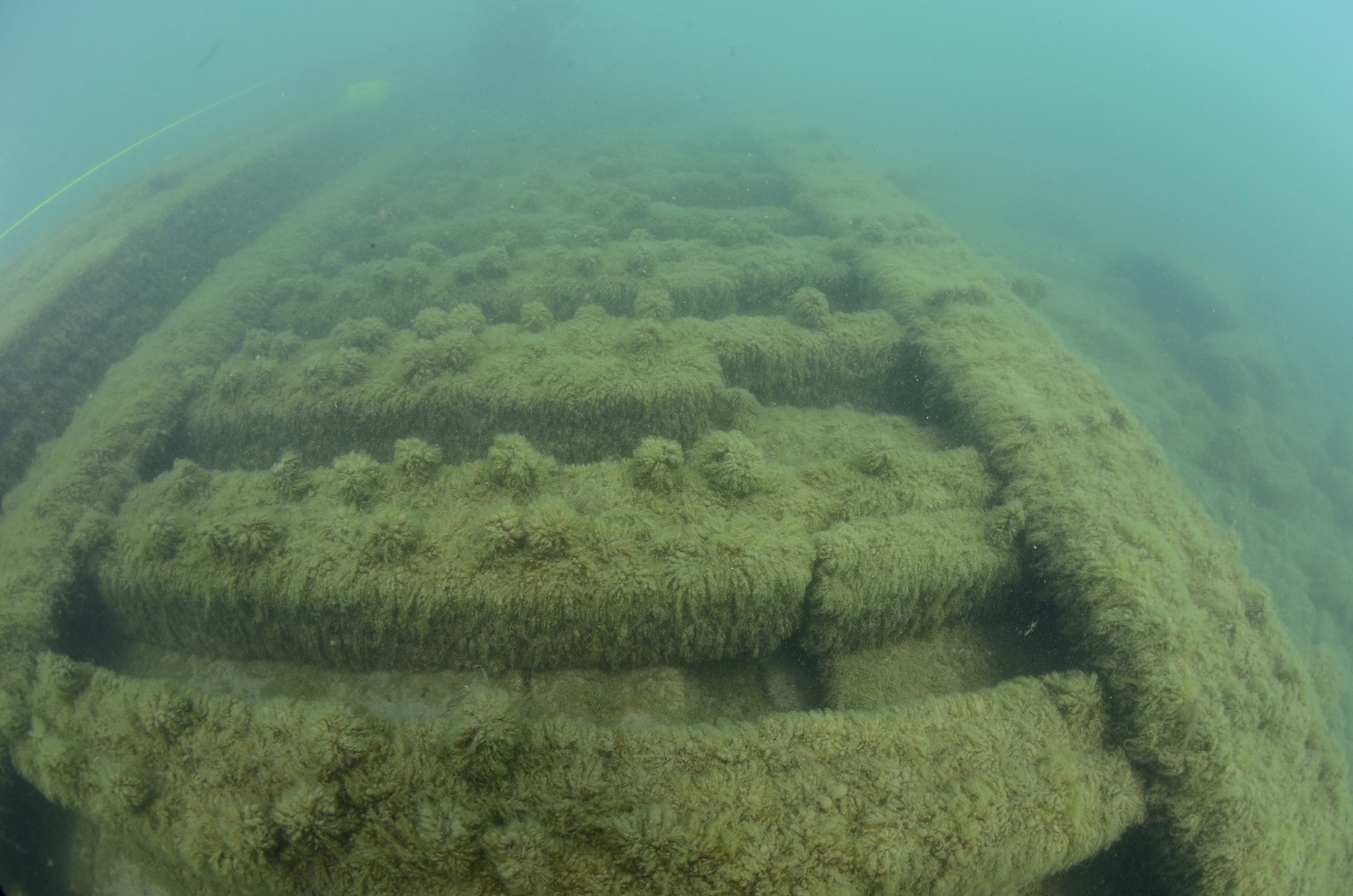
Montgomery is located on a rocky bottom 0.45 miles east of the Whistling Straights Golf Course in 12 feet of water. The vessel’s keelson and floors remain intact along with its two centerboard trunks, and hull planking.

 Confirmed Location
 Unconfirmed location